|
 |
 |
 |
 |
 |
 |
 |
 |

 |
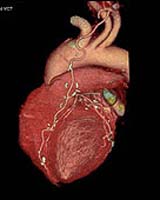
Discovery Of Cardiac Stem Cells May Advance Regenerative Heart Therapy
Boston MA (SPX) Nov 23, 2006 An immediate early publication of the journal Cell, published by Cell Press, on Nov. 22, 2006 points to the possible existence of master cardiac stem cells with the capacity to produce all three major tissues of the mammalian heart. A companion Cell paper also published online reports the discovery of a second population of cardiac progenitors, which are capable of forming both cardiac muscle and the smooth muscle found in the heart's blood vessel walls. Together with similar findings reported in the November issue of the journal Developmental Cell, also a Cell Press publication, the findings challenge the notion that the heart's diverse cell types--including cardiac muscle, smooth muscle, and the endothelial cells that line blood vessels--stem from "non-overlapping embryonic precursors derived from distinct origins," according to the researchers. The findings may also have important implications for regenerative medicine aimed at cardiac repair in patients with congenital or acquired heart disease, according to the researchers. "It's a surprise that a single cell can give rise to all of these tissues and structures in the heart," said Kenneth Chien of Massachusetts General Hospital and Harvard Medical School. "The heart may look more like blood than we thought," he added, referring to the fact that single so-called hematopoietic stem cells can give rise to all of the cell types found in blood. "This changes the way we think about organ development," said Howard Hughes Medical Institute investigator Stuart Orkin, the author of the companion paper from the Children's Hospital Boston. "Rather than different cell types coming together, the heart appears to develop from a common set of progenitors or stem cells. This may be a more economical method." Chien's team earlier found a group of cardiac muscle progenitors called islet-1 (isl1+) cells in heart tissue from newborn rats, mice, and humans. The cells are defined by the presence of an isl1 protein. To further examine the developmental potential of these isl1 progenitor cells in the current study, the researchers traced the fate of these cells in the hearts of mice. They found that the isl1 precursors produce not only cardiac muscle but also smooth muscle, endothelial, pacemaker, and other nonmuscle cell lineages. They then showed that the isl1 cells could be obtained from embryonic stem cells. "These studies document a developmental paradigm for cardiogenesis, where muscle and endothelial lineage diversification arises from a single cell-level decision of a multipotent isl1+ cardiovascular progenitor cell," Chien said. In the second study, Orkin and his colleagues isolated cells from a mouse embryo that expressed a cardiac-specific gene, called Nkx2.5+. They found that the Nkx2.5 cells spontaneously differentiated primarily into cardiac muscle cells and conduction system cells. The heart's conduction system carries the electrical impulses that allow it to beat. Surprisingly, they found, some of the precursor cells took on a smooth muscle fate. They then isolated Nkx2.5 cells derived from embryonic stem cells and found that some of the cells also expressed a second gene, c-kit. It was the c-kit+Nkx2.5+ cells that had the ability to expand and produce both cardiac muscle and smooth muscle cells from a single cell. The team confirmed that finding by isolating cells in which both genes were active and demonstrating their ability to form both heart muscle types in living animals. "In summary, we have established the existence of a common myogenic precursor cell that gives rise to both myocardial and smooth muscle lineages," Orkin wrote. "This bipotential progenitor cell makes a lineage choice decision at a single-cell level. These findings reveal a hierarchy for myogenic differentiation in vivo and suggest a new developmental paradigm for cardiogenesis where a single multipotent progenitor cell gives rise to cells of diverse lineages within the heart." While the Isl1+ cells studied by Chien may give rise to the c-kit+Nkx2.5+ cells examined by Orkin, the precise relationship between the progenitor cells investigated in the two studies is an open question requiring further study, the researchers noted. "It's unknown what the relationship between these cells is, if any. One may be the predecessor of the other, or they might be quite separate," Orkin said, noting that the cells under study in the two papers appear to be derived from two separate pools, or fields, of heart progenitors. The primary and secondary heart fields are thought from previous studies to generate structures of the left and right side of the heart, respectively. The discovery of cardiovascular-specific progenitors may hold promise for cardiac stem cell therapies, the researchers said. "Embryonic stem cells are difficult to use for heart regeneration because of the danger of teratomas," Chien said. Teratomas are cancers that result from the uncontrolled growth of embryonic stem cells. "If we can get around that threat by cloning master cardiovascular stem cells, that would be a major advance." "Regenerative stem cell therapies for heart disease will require an understanding of and an ability to manipulate the molecular mechanisms that govern the fates, differentiation, and morphogenesis of the myriad cell types that comprise the heart," wrote Daniel Garry and Eric Olson in a minireview that will accompany the new studies in Cell's Dec. 15 issue. These studies offer a "step toward this goal" by providing "evidence for common multipotential progenitors of the three major cell types of the heart." Community Email This Article Comment On This Article Related Links Harvard Medical School Howard Hughes Medical Institute Stem Cell News And Information Nuclear Space Technology at Space-Travel.com
 Israel Prepares For Another War
 Tel Aviv (UPI) Nov 07, 2006
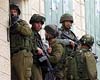
The engine of the Lebanese army truck groaned as its driver engaged the muddy track along the border with Israel. At the Israeli army post Nurit, overlooking the route, a cameraman waved. The response was an insulting Middle Eastern gesture. The message was not significant. The messenger was. For some 30 years the Lebanese Army avoided venturing to the border area, leaving it to Palestinian militants, then to Hezbollah. |
|
|

| The content herein, unless otherwise known to be public domain, are Copyright 1995-2006 - SpaceDaily.AFP and UPI Wire Stories are copyright Agence France-Presse and United Press International. ESA PortalReports are copyright European Space Agency. All NASA sourced material is public domain. Additionalcopyrights may apply in whole or part to other bona fide parties. Advertising does not imply endorsement,agreement or approval of any opinions, statements or information provided by SpaceDaily on any Web page published or hosted by SpaceDaily. Privacy Statement |