|
 |
 |
 |
 |
 |
 |
 |
 |

 |
Dirty Water Deals Cheat the Poor
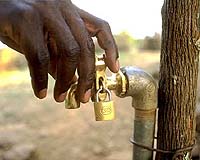
Stockholm, Sweden (IPS) Sep 05, 2006 Expressing concern over the "pervasiveness of corruption" in the management of water, a coalition of six international non-governmental organisations has created a new global anti-corruption watchdog body: the Water Integrity Network (WIN). Launched Tuesday during "World Water Week" in the Swedish capital, the network vows to root out unethical behaviour by promoting good governance and transparency in the water sector. "At a time when we are talking about increasing investments to expand water supplies and water resources, we also have indications that about 25 to 30 percent of state budgets on water investments are lost due to corruption," Hakan Tropp, WIN's interim chair, told IPS. This is only an average figure, he pointed out, but the numbers could vary from country to country -- going lower or higher depending on the degree of corruption and mismanagement. The six groups that have joined hands to fight corruption in water management include the Stockholm International Water Institute, Transparency International, Swedish Water House, the International Water and Sanitation Centre, Water and Sanitation Programme- Africa and AquaFed. The network's mandate will include diagnosing problems, proposing solutions, building capacity and monitoring progress. It will coordinate with civil society, public and private sectors, and with news media and governments. Asked about the extent of corruption in the water sector, Tropp said there have been several recent case studies both in Africa and in major urban centres in India, particularly regarding the unsteady relationships between consumers and service providers. At the grassroots level, he said, the poor have been forced to pay bribes to connect to water pipes or to water tankers. But there was also increased high-level corruption both in procurement and infrastructure development, resulting in misallocation of scarce economic resources. Corruption is a two-way street, with a supply side and a demand side. And it is prevalent both in developing and developed countries, said Tropp, who is also project director of the Water Governance Facility at the Stockholm International Water Institute. "It takes two to tango," he said, singling out some of the corrupt practices of multinational corporations seeking investments and contracts in developing nations through bribery and commissions. He said the network plans to work through the various chapters of Transparency International, which is well established in several world capitals. According to WIN, corruption not only diverts irrigated water away from poor villages but also leads to biased decisions about the allocation and location of water service points, pipe systems and waste water treatment facilities. Additionally, corruption also results in falsifying water meter readings; fosters ill-advised procurement of expensive and poorly constructed facilities; and buys jobs and promotions. David Nussbaum, chief executive officer of the Berlin-based Transparency International, told reporters Tuesday there are two types of corruption in the water sector: petty corruption and grand corruption. "Both destroy the supply mechanism," he said. In a 37-page report released Tuesday, Janelle Plummer and Piers Cross of the Water and Sanitation Programme Africa say "petty corruption" involves a vast number of officials who abuse public office by extracting small bribes and favours while "grand corruption" involves the misuse of vast amounts of public sector funds by a relatively small number of officials. These corrupt practices take the form of abuse of resources, such as theft and embezzlement from budgets and revenues; corruption in procurement resulting in overpayments and failure to enforce quality standards; administrative corruption in payment systems; and corruption at the point of delivery. The study, titled "Tackling Corruption in the Water and Sanitation Sector in Africa" and released in Stockholm, says corruption involves a vast range of stakeholders: donor representatives, private companies, multinational corporations, national and local construction companies, consultancy firms and suppliers, large- and small-scale operators, middle men, consumers, national and sub-national politicians, and all grades of civil servants and utility staff. "Corrupt activities between these partners occur at a range of institutional levels, with different stakeholders often involved in one or more types of corruption," the study notes. In sub-Saharan Africa, some 6.7 billion dollars is required annually to meet the U.N.'s development goals to halve extreme poverty by 2015. A 30 percent leakage would drain more than 20 billion dollars over the next decade, it adds. In a second study titled "Corruption in the Water Sector: Causes, Consequences and Potential Reform", the Swedish Water House says that corruption affects the governance of water by affecting who gets what water when, where and how. "Corruption worsens the world water crisis and evidence suggests that the costs are disproportionately borne by the poor and by the environment," the study says. But it warns that breaking with corruption in the water sector "will not be easy." Fighting corruption should include legal and financial reforms, reform of public service delivery systems, reform in the private sector, and public awareness and capacity building. "Further delays to step up anti-corruption action will deepen the governance crisis in the water sector, with devastating effects for millions of people and for the environment," the study concludes.
Source: Inter Press Service News Agency Community Email This Article Comment On This Article Related Links Water, Water Everywhere and Not A Drop To Drink... Water News - Science, Technology and Politics
 Drought Returns To Torment Major Chinese City
 Beijing (AFP) Aug 30, 2006
Drought has returned to a major city in southwest China, threatening the water supply of millions of people and forcing officials to resume emergency measures, state media said Wednesday. |
|
|

| The content herein, unless otherwise known to be public domain, are Copyright 1995-2006 - SpaceDaily.AFP and UPI Wire Stories are copyright Agence France-Presse and United Press International. ESA PortalReports are copyright European Space Agency. All NASA sourced material is public domain. Additionalcopyrights may apply in whole or part to other bona fide parties. Advertising does not imply endorsement,agreement or approval of any opinions, statements or information provided by SpaceDaily on any Web page published or hosted by SpaceDaily. Privacy Statement |