|
 |
 |
 |
 |
 |
 |
 |
 |

 |
Development Key To Promoting Primate Conservation In Uganda
Entebbe, Uganda (AFP) Jun 26, 2006 Human development is the only way to promote the sustainable conservation of wildlife, including Africa's endangered Great Apes, in impoverished nations, Uganda's president said Monday. Without addressing the needs of people, efforts to conserve rare and threatened flora and fauna will fail and only further hurt the environment, Yoweri Museveni said in a speech to conservationists meeting here. "You cannot maintain under-development and at the same time conserve nature," he told some 700 participants from 55 countries attending the 21st conference of the International Primatological Society. He said better living standards for poor communities, modern farming techniques and industrialization in urban areas was the best way to preserve threatened eco-systems and animals. "The biggest threats are the human beings engaged in primitive agriculture, looking for firewood and building material but who end up endangering the eco-systems," Museveni said. "How can you conserve the ecosystem with such destruction?" he asked, noting that in Uganda up to 28 billion cubic meters of firewood is destroyed each year. "We need electricity from clean sources." "Some conservationists are opposed to building of power dams," Museveni said. "If you oppose building of dams, you will be campaigning for the destruction of conservation. "The answer is electricity, electricity as the best facilitator to conservation," said the president, who has in the past railed against what he has called foreign meddling that has stopped Ugandan development projects. Uganda is home to 18 primate species, including some 5,000 chimpanzees and more than half the world's 800 remaining mountain gorillas, and Museveni urged conservationists to spend time on the needs of their human neighbors. "These people should shift to industry and services and leave agriculture to more efficient farmers who do not have to compete for land with conservation efforts," he said. Museveni also raised eyebrows at the conference, which is being attended by such luminaries as reknowned primatologist Jane Goodall. "Research is particularly important in the area of primatology," he said. "Scientists have over the years used apes and monkeys in research to cure diseases and to find drugs. I don't know whether you oppose this or not, but for me it is a good idea."
Source: Agence France-Presse Community Email This Article Comment On This Article Related Links - Darwin Today At TerraDaily.com
 Journey To Yungay Is A Trip Into The Dead Zone
 Yungay, Chile (SPX) Jun 26, 2006
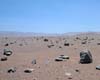
Yungay, Chile, is hardly a tourist destination. Indeed, it's hardly a town. More like a ghost town. In the past, Yungay was a center of activity for a nearby sodium nitrate mine. Now, the mine is closed, the town all but deserted. Despite its remote isolation, in recent years, Yungay has become a popular international travel destination - not for tourists, but for astrobiologists. |
|
|

| The content herein, unless otherwise known to be public domain, are Copyright 1995-2006 - SpaceDaily.AFP and UPI Wire Stories are copyright Agence France-Presse and United Press International. ESA PortalReports are copyright European Space Agency. All NASA sourced material is public domain. Additionalcopyrights may apply in whole or part to other bona fide parties. Advertising does not imply endorsement,agreement or approval of any opinions, statements or information provided by SpaceDaily on any Web page published or hosted by SpaceDaily. Privacy Statement |