
 |
 |
 |
 |
 |
 |
 |
 |
 |

 |
Detecting Dirty Bomb Material With ESA Gamma-Ray Technology
Paris, France (ESA) Oct 31, 2008 Thanks to ESA and UK technology transfer support, a British company has developed a device based on the gamma-ray detection equipment used in ESA's Integral astronomy satellite to detect and identify the radioactive material mixed with conventional explosives in 'dirty bombs'. ESA has supported the development of technology for gamma-ray astronomy for more than 40 years. Integral, ESA's International Gamma-Ray Astrophysics Laboratory launched in 2002, is now detecting some of the most energetic radiation to be found in space, such as that from gamma-ray bursts, supernovas and black holes in the Milky Way and distant galaxies at the edge of the observable Universe. This same technology is now being used by the company to develop and commercialise radiation detection and identification technology. The company was formed in 2002 and with support from the UK technology transfer initiative and ESA's Technology Transfer Programme Office it was put in contact with a world-leading provider of explosives trace and X-ray detection systems. Most radioactive sources produce gamma rays of various energies and intensities. By detecting and analysing them, a gamma-energy spectrum can be produced - a kind of radiation fingerprint - to identify the substance and the quantity.
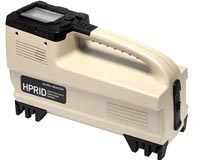
Portable detection device The detection of illicit traffic in radioactive materials that could be used to make dirty bombs is a high priority for national security in the US. Threatening nuclear materials must be identified from a range of natural radioactive materials such as clay tiles, ceramics and even bananas, as well as from a range of legally transported radioactive materials such as medical isotopes. Effective screening devices are required for personnel and freight at ports and borders. The detection and identification of dangerous radioactive material has to be reliable and quick so as not to disrupt the normal flow of commerce. The companies are developing a handheld and backpack Human Portable Radiation Detection System, tailored to meet these criteria. The device features space radiation detection hardware and signal processing software for use by emergency services, border patrol agents, customs and coast guard officers, and other law enforcement personnel. The detectors can identify and determine the location of incoming radiation and also reliably discriminate between normally occurring radioactive material and potential threats. Community Email This Article Comment On This Article Share This Article With Planet Earth
Related Links Smiths Detection The Long War - Doctrine and Application
 Military Matters: Why al-Qaida failed
 Washington (UPI) Oct 30, 2008
 I have suggested in previous columns that the al-Qaida model of Fourth Generation war may be failing for inherent reasons -- that is to say, for reasons it cannot fix. |
|
|

| The content herein, unless otherwise known to be public domain, are Copyright 1995-2007 - SpaceDaily.AFP and UPI Wire Stories are copyright Agence France-Presse and United Press International. ESA Portal Reports are copyright European Space Agency. All NASA sourced material is public domain. Additional copyrights may apply in whole or part to other bona fide parties. Advertising does not imply endorsement,agreement or approval of any opinions, statements or information provided by SpaceDaily on any Web page published or hosted by SpaceDaily. Privacy Statement |
 del.icio.us
 Digg
Digg Reddit
 YahooMyWeb
 Google
 Facebook