|
 |
 |
 |
 |
 |
 |
 |
 |

 |
Deflection of Spacecraft Trajectories as a New Test of General Relativity
West Lafayette - April 4, 2001 An engineering professor who sat in on a physics course to pursue his lifelong dream of understanding the general theory of relativity, not only reached that goal but came up with a new way of testing Einstein's masterwork. "For me, it all started as a dream to understand general relativity," said James Longuski, an aerospace engineer and professor of aeronautics and astronautics at Purdue University. "To actually make a contribution to general relativity was beyond my wildest dreams." Longuski devised a new way of testing the theory by precisely measuring small changes in the position of a spacecraft as it passes near the sun. He developed a new mathematical formula for calculating precisely how much of the spacecraft's changing position would be due to general relativity. The formula makes it easier to test relativity by reducing pages of calculations into a single line of mathematical terms. A scientific paper detailing the technique will be published Monday (4/2) in Physical Review Letters, a journal published by the American Physical Society. Longuski wrote the paper with Ephraim Fischbach, a Purdue physics professor, and Daniel Scheeres, an assistant professor of aerospace engineering at the University of Michigan. Fischbach said scientists are always looking for new ways of testing general relativity, which is a pillar of modern physics that is critical to learning how the universe evolved. Since the theory was published in 1915, numerous experiments have shown its predictions to be correct. However, even a small numerical deviation from the theory's predictions would be considered big news in physics, Fischbach said. "General relativity is at the heart of understanding everything in cosmology -- how the universe evolved -- so it's very important that we continue to test it so that we can be sure that its predictions are correct," Fischbach said. "If one ever found a discrepancy, that would be a major contribution to science." Longuski specializes in the effects of gravity on a spacecraft's trajectory, or its passage through space. The sun and planets in the solar system are used to help propel and guide spacecraft to their ultimate destinations. These bodies provide "gravity assists," commonly called "slingshot" trajectories, which enable spacecraft to achieve the proper speed and heading while minimizing fuel consumption. Because general relativity can be tested by measuring how gravity bends the paths of moving particles or a beam of light, Longuski reasoned the theory could be tested by precisely measuring how the sun's gravity would affect a spacecraft's trajectory. Einstein used general relativity in the early 20th century to solve a long-standing mystery about a tiny discrepancy in Mercury's orbit around the sun. Conventional Newtonian physics could not entirely account for the behavior of the planet's orbit. Astronomers had even resorted to postulating that an undiscovered planet, which they called Vulcan, must be located between Mercury and the sun, exerting additional gravitational forces on Mercury that affected its orbit. Einstein precisely calculated Mercury's orbit using general relativity, providing critical evidence for the theory's validity and disproving competing theories, such as the existence of Vulcan. Longuski's technique represents a more controlled method for measuring the same effect seen in Mercury's orbit. "The trouble with observing Mercury is that it is given to us by nature and we can't tinker with it," Fischbach said. "Instead of observing a planet, we would use a spacecraft and measure its motion to get the equivalent information, but under more controlled circumstances, in a way that you get a more precise test." Longuski, a seasoned engineer and educator who has written more than 100 research papers, derived his new formula not as a teacher but as a student. His lifelong desire to learn about general relativity prompted him to sit in on a course taught by Fischbach in 1997. As part of the course, Fischbach requires his students to write a research paper by the end of the semester. Longuski, who decided to write a paper showing how to test general relativity using a spacecraft's trajectory as it whipped past the sun, credits his findings to a "cross pollination" of ideas from diverse areas of research: physics and astronautics. "This demonstrates the value of learning, even for people who are already established experts in their given fields," Longuski said. When Longuski showed Fischbach his formula, the physics professor realized that no one had thought of it before. By itself, the new formula probably would have been worthy of publication in a scientific journal. But it would be far better to create a realistic experiment using the formula to test general relativity. Longuski learned about a mission proposed in 1994 by scientists at the California Institute of Technology and the Jet Propulsion Laboratory. That mission, as conceived by Caltech space physicist Richard Mewaldt and his colleagues at JPL, would use the sun's gravity as a slingshot to catapult a spacecraft out of the solar system. The craft would be sent close to the sun, and its rocket would be fired at just the right moment to make for maximum use of the sun's gravity. Although the Small Interstellar Probe mission was designed to study the characteristics of space outside the solar system, the spacecraft's trajectory around the sun could be used to test general relativity. By precisely tracking the spacecraft's position at its closest approach to the sun, a point in the orbit called its perihelion, researchers could test general relativity. Furthermore, Scheeres determined no additional hardware would be needed to track the spacecraft. A network of NASA antennas known as the Deep Space Network, which uses radio waves to communicate with spacecraft, could be used for the experiment. Community Email This Article Comment On This Article Related Links SpaceDaily Search SpaceDaily Subscribe To SpaceDaily Express Space
 Satellite Launch To Boost DTH In India
 Calcutta, India (SPX) Dec 28, 2005
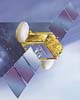
The successful launch Thursday of India's heaviest satellite from spaceport of Kourou in French Guyana may have boosted the country's space research efforts to yet another level, but it has also lifted the spirits of at least three Direct-To-Home televisions broadcasters, one of which has been waiting for years to launch its services in India. |
|
|

|
|
|
|
|
|
|
|
|
|
|
|
| The content herein, unless otherwise known to be public domain, are Copyright 1995-2006 - SpaceDaily.AFP and UPI Wire Stories are copyright Agence France-Presse and United Press International. ESA PortalReports are copyright European Space Agency. All NASA sourced material is public domain. Additionalcopyrights may apply in whole or part to other bona fide parties. Advertising does not imply endorsement,agreement or approval of any opinions, statements or information provided by SpaceDaily on any Web page published or hosted by SpaceDaily. Privacy Statement |