|
 |
 |
 |
 |
 |
 |
 |
 |

 |
Defense Scientists Call For Halt To Missile Defense Deployment Funding
Washington (AFP) Apr 07, 2005 A group of top US scientists, including nine Nobel Prize winners, called on Congress Thursday to stop funding deployment of interceptor missiles for a controversial ground-based missile defense system, saying it was incapable of defending against a real attack. In a letter, they said the funding should be eliminated until the system can be shown to work through tests that mimic real-world conditions. "We judge that, in the absence of realistic and successful testing, declaring the system operational - and any further deployment of GMD components - would be technically indefensible," the letter said. Among the 22 signers of the letter were nine Nobel laureates in physics, as well as physics professors from leading US universities and research centers. They noted that senior administration officials have said the ground-based missile defense system, which is designed to intercept and destroy incoming long-range missiles, would be 90 percent effective against a North Korean missile. "These statements are attractive but wrong," the letter said. "As scientists and engineers, many with long experience in advising the government on military issues, we conclude that this missile defense system will have essentially no capability to defend against a real missile attack," the scientists added. Asserting that the system does have utility when it does not, they said, "is dangerous and could contribute to unwise decisions by US policymakers." They said that all flight intercept tests have been highly scripted and added that until operationally realistic tests are conducted, there is no data on which to assess how it effective it would be in a real attack. Even if the system worked perfectly, it could not defend against a missile with even the unsophisticated counter-measures available to North Korea, they asserted. "For these reasons, we urge you to eliminate all funding to purchase or deploy any additional interceptor missiles until operationally realistic tests of the system demonstrate that it would work against a real-world attack," they said. Community Email This Article Comment On This Article Related Links SpaceDaily Search SpaceDaily Subscribe To SpaceDaily Express Learn about missile defense at SpaceWar.com Learn about nuclear weapons doctrine and defense at SpaceWar.com All about missiles at SpaceWar.com Learn about the Superpowers of the 21st Century at SpaceWar.com
 Missile Defense Program Moves Forward
 Washington DC (AFPS) Jan 12, 2006
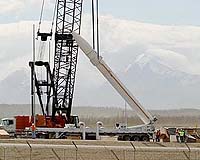
The Missile Defense Agency continues to move forward in its efforts to protect the nation against a ballistic missile attack. The eighth ground-based interceptor missile was lowered into its underground silo at Fort Greely, Alaska, Dec. 18, 2005. |
|
|

| The content herein, unless otherwise known to be public domain, are Copyright 1995-2006 - SpaceDaily.AFP and UPI Wire Stories are copyright Agence France-Presse and United Press International. ESA PortalReports are copyright European Space Agency. All NASA sourced material is public domain. Additionalcopyrights may apply in whole or part to other bona fide parties. Advertising does not imply endorsement,agreement or approval of any opinions, statements or information provided by SpaceDaily on any Web page published or hosted by SpaceDaily. Privacy Statement |