|
 |
 |
 |
 |
 |
 |
 |
 |

 |
Defense Focus 2007 In Review Part Two
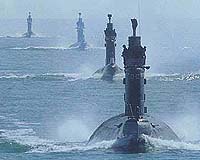
Washington (UPI) Jan 7, 2008 The year 2007 was a year when several major powers served notice that U.S. weapons superiority in every field and class wasn't going to remain an uncontested monopoly. China continued to out-build the United States in submarines by factors of 10-to-1 or even 14-to-1 per year, largely because good, small and medium-size diesel subs are far cheaper, faster and easier to produce than enormous nuclear-powered ones. But neither Republicans nor Democrats on Capitol Hill gave any serious thought to pushing for a diesel-sub component to the U.S. undersea fleet to balance it and match China in affordable numbers. On the contrary, nuclear power advocates with strong allies in the U.S. Navy launched a new campaign arguing that the entire surface fleet should be nuclear powered, despite the expense and the cramping effect this would have on maintaining large numbers of ships. Nor was there any politically significant push to argue the case for streamlining the F-22 and, especially, the F-35 to produce small, more specialized and affordable per unit fighters and other combat aircraft that future administrations would realistically be able to buy in significant numbers. On an individual basis, the major U.S. defense contractors from Boeing and Lockheed Martin in combat aircraft and missiles, to General Dynamics Electric Boat in nuclear submarines continued to turn out and maintain state-of-the-art weapons systems that remained without peer in the world. But there were growing areas where the superiority that U.S. manufacturers and policymakers had been able to take for granted for so long were being challenged or even surpassed. Russia, after all, could produce supersonic cruise missiles that flew at 2,000 miles per hour only 100 feet above ground level, and the year ended with the Kremlin even expanding its joint manufacturing program to share this technology with India. The U.S.-built Tomahawk by contrast could still only fly at subsonic speeds, less than 750 miles per hour at ground level, with increasing concerns that the latest Russian air defense systems like the S-400 deployed around Moscow during the summer or the Tor-M1 sold to Iran could have a significant success rate of interceptions against it. Nor did U.S. contractors or the U.S. Navy have any capability to build anti-surface ship sea-launched missiles comparable in hitting power to the Russian SS-N-22 Moskit or the SS-N-27 Sizzler. It was a year when U.S. defense contractors lost out to Russian competition in some traditionally U.S.-dominated markets around the world: Saudi Arabia spent $1 billion for Russian helicopters and Indonesia bought $1 billion worth of Sukhoi combat fighters and Kilo-class diesel submarines. Even America's new friend India resolutely refused to buy U.S. combat aircraft and stuck with Russian Sukhois instead. The year ended with Russian arms executives confident that India would place an enormous order for no less than 300 T-90S Main Battle Tanks. From the point of view of the major U.S. defense contractors, it wasn't the best of years and it certainly wasn't the worst of years either. It was a reasonably good year in which some negative developments that had been feared certainly did not happen. The Democratic takeover of Congress did not result in any effort to gut or irresponsibly slash military procurement programs. On the contrary, the interaction between Democratic notables such as Sen. Carl Levin of Michigan and Rep. Henry Waxman of California with Defense Secretary Robert Gates proved in general fruitful and constructive. It was a year above all of "business as usual," with routine but solid progress made and important questions for the future left unanswered. The biggest news, therefore, wasn't what did happen, but what didn't. Once again, a lot of dogs stayed silent that should have barked in the night. Community Email This Article Comment On This Article Related Links The latest in Military Technology for the 21st century at SpaceWar.com
 DRS Tech Gets Contract To Supply Marine Corps With Rugged Tablet Computers
 Parsippany NJ (SPX) Jul 10, 2007
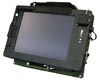
DRS Technologies has received a $5 million award as part of a previous contract to provide military rugged tablet (MRT) computers and peripheral equipment for the U.S. Marine Corps' Target Location Designation Handoff System (TLDHS) program. DRS received the order from Stauder Technologies in St. Peters, Missouri. For this contract the company's DRS Tactical Systems business unit in Melbourne, Florida, will produce hundreds of the handheld MRT computers and peripheral equipment. |
|
|

| The content herein, unless otherwise known to be public domain, are Copyright 1995-2007 - SpaceDaily.AFP and UPI Wire Stories are copyright Agence France-Presse and United Press International. ESA Portal Reports are copyright European Space Agency. All NASA sourced material is public domain. Additional copyrights may apply in whole or part to other bona fide parties. Advertising does not imply endorsement,agreement or approval of any opinions, statements or information provided by SpaceDaily on any Web page published or hosted by SpaceDaily. Privacy Statement |