|
 |
 |
 |
 |
 |
 |
 |
 |

 |
Deep Impact Trajectory Maneuver Will Ensure Impact Visible From Earth
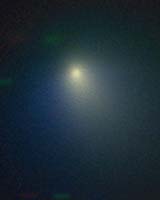
Pasadena CA (JPL) May 16, 2005 Fifty-nine days before going head-to-head with comet Tempel 1, NASA's Deep Impact spacecraft successfully executed the second trajectory correction maneuver of the mission. The burn further refined the spacecraft's trajectory, or flight path, and also moved forward the expected time of the Independence Day comet encounter to ensure the impact is visible with ground- and space- based observatories. The 95-second burn � the longest remaining firing of the spacecraft's motors prior to comet encounter - was executed on May 4. It changed Deep Impact's speed by 18.2 kilometers per hour (11.3 miles per hour). "Spacecraft performance has been excellent, and this burn was no different," said Rick Grammier, Deep Impact project manager at NASA's Jet Propulsion Laboratory. "It was a textbook maneuver that placed us right on the money." Right on the money is where Deep Impact has to be to place a 1-meter- long (39-inch) impactor spacecraft in the path of a comet about as big as the island of Manhattan that is bearing down on it at 37,100 kilometers per hour (6.3 miles per second). At the same time, from a very comet-intimate distance of 500 kilometers (310 miles), a flyby spacecraft will be monitoring the event. This all occurs in the wee hours of July 4 � at 1:52 am Eastern time (July 3, 10:52 p.m. Pacific time) - at a distance of 133.6-million kilometers (83- million miles) from Earth. "With this maneuver our friends working the Hubble Space Telescope are assured a ringside seat," said Deep Impact Principal Investigator Dr. Michael A'Hearn of the University of Maryland, College Park. "Their observations, along with space telescopes Chandra and Spitzer and numerous ground-based observatories, will provide us with the most scientific bang for our buck with Deep Impact." Deep Impact is comprised of two parts, a "flyby" spacecraft and a smaller "impactor." The impactor will be released into the comet's path before a planned high-speed collision on July 4. The crater produced by the impact could range in size from the width of a large house up to the size of a football stadium, and from 2 to 14 stories deep. Ice and dust debris will be ejected from the crater, revealing the material beneath. The Deep Impact spacecraft has four data collectors to observe the effects of the collision. A camera and infrared spectrometer, which comprise the High Resolution Instrument, are carried on the flyby spacecraft, along with a Medium Resolution Instrument. A duplicate of the Medium Resolution Instrument on the impactor will record the vehicle's final moments before it is run over by comet Tempel 1 at a speed of about 37,100 kilometers per hour (23,000 miles per hour). Community Email This Article Comment On This Article Related Links Deep Impact SpaceDaily Search SpaceDaily Subscribe To SpaceDaily Express Asteroid and Comet Mission News, Science and Technology
 NASA'S Spitzer Finds Possible Comet Dust Around Dead Star
 Pasadena CA (SPX) Jan 12, 2006
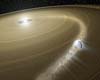
NASA's Spitzer Space Telescope has spotted what may be comet dust sprinkled around the white dwarf star G29-38, which died approximately 500 million years ago. |
|
|

| The content herein, unless otherwise known to be public domain, are Copyright 1995-2006 - SpaceDaily.AFP and UPI Wire Stories are copyright Agence France-Presse and United Press International. ESA PortalReports are copyright European Space Agency. All NASA sourced material is public domain. Additionalcopyrights may apply in whole or part to other bona fide parties. Advertising does not imply endorsement,agreement or approval of any opinions, statements or information provided by SpaceDaily on any Web page published or hosted by SpaceDaily. Privacy Statement |