|
 |
 |
 |
 |
 |
 |
 |
 |

 |
Deadly Pneumonia Hits Pakistan Quake Children
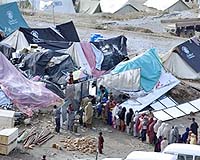
Muzaffarabad, Pakistan (AFP) Nov 29, 2005 Pneumonia is spreading amongst cold and hungry children who survived Pakistan's giant earthquake, killing two and affecting hundreds more as the Himalayan winter sweeps in, officials said Tuesday. The United Nations begged the international community for extra help as it raced against time to save millions of people threatened by disease and hypothermia because of the sudden change in the weather. More snow fell in mountain villages overnight and temperatures fell below freezing throughout the disaster zone, threatening to bring about a second wave of deaths that aid agencies have long warned of. "Pneumonia has spread among children, according to data received from different places," Sardar Mahmood Khan, district health officer in Muzaffarabad, the ruined capital of Pakistani-administered Kashmir, told AFP. "We are receiving hundreds of cases in different areas. The winter is severe this year. There is no proper shelter, no clothing for children and no nutrition," Khan said. The October 8 quake killed more than 74,000 people in Pakistan and India but there are fears they could only be the first wave of deaths as 3.5 million survivors were left homeless shortly before the onset of winter. The United Nations said late Monday that two children -- a three-month-old boy and a young girl -- had died of suspected pneumonia after the first snowfall of the winter in northern Pakistan and Kashmir at the weekend. "We need ongoing and additional support in the next few days so we could reach as many of the remaining vulnerable people as possible," Andrew MacLeod, the UN emergency operations chief in Pakistan, said in a statement. He said that most of the 5.8 billion dollars pledged by donors at a conference on November 19 was for long-term rebuilding, while a 550-million-dollar UN appeal for immediate aid remains less than half-funded. "Winter and nature are reminding us: 'Concentrate on relief in order to save lives, reconstruct later,'" MacLeod said. The young girl died from suspected pneumonia on Monday as her father carried her from the remote village of Kumi in northwestern Pakistan to the destroyed town of Balakot 20 kilometres (12 miles) away, MacLeod said. The three-month-old boy died of pneumonia on the same day after he was brought to a hospital in Muzaffarabad from the nearby Neelum Valley, MacLeod added. The UN said snow and rain had also "severely hampered" its helicopter and truck relief operations. International and Pakistani choppers were flying again on Tuesday after they were grounded throughout Sunday and on Monday morning, said Major Farooq Nasir, the army's relief operations spokesman in Muzaffarabad. Heavy rains lashed the city briefly in the afternoon and isolated snow showers were set to continue in the most mountainous parts of the quake zone until Tuesday evening, the Pakistani meteorological department said. The weather was expected to be drier on Wednesday morning but a cold wave is now on its way, during which daytime temperatures would be less than normal and temperatures at night would plummet below freezing, it said on its website. Meanwhile, a series of mild aftershocks jolted northern Pakistan early Tuesday but there were no reports of casualties or damage. A tremor measuring 4.1 on the Richter scale was felt at 4:50 am (2350 GMT), one of among eight aftershocks recorded in the past 24 hours, chief of the seismological department Qamaruz Zaman told AFP. Community Email This Article Comment On This Article Related Links SpaceDaily Search SpaceDaily Subscribe To SpaceDaily Express News From Across The Stans
 UN Calls On Central Asia To Cooperate With Each Other And Make Money
 United Nations (UPI) Dec 08, 2005
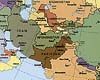
The U.N. Development Program says Kazakhstan, Kyrgyzstan, Tajikistan, Turkmenistan and Uzbekistan could double their incomes over the next 10 years. That is a pretty ambitious projection by the UNDP in a report released in Tokyo Wednesday on the Central Asia states. The question is how? |
|
|

| The content herein, unless otherwise known to be public domain, are Copyright 1995-2006 - SpaceDaily.AFP and UPI Wire Stories are copyright Agence France-Presse and United Press International. ESA PortalReports are copyright European Space Agency. All NASA sourced material is public domain. Additionalcopyrights may apply in whole or part to other bona fide parties. Advertising does not imply endorsement,agreement or approval of any opinions, statements or information provided by SpaceDaily on any Web page published or hosted by SpaceDaily. Privacy Statement |