
 |
 |
 |
 |
 |
 |
 |
 |
 |

 |
Darwin's Toughest SpaceCraft
Huntsville - April 21, 1999 - In a paper presented earlier this month at the International Conference on Advanced Propulsion two space scientists may be giving the term "mother ship" a whole new meaning. Drs. David Noever and Subbiah Baskaran, both of the NASA Marshall Space Sciences Laboratory, paper discussed the potential of spacecraft reproduction and evolution. "The next generation of spacecraft will more than likely evolve traits that their parent-ships could not have equaled," says Noever. Computers can create infinite lists of combinations to try to solve a particular problem, a process called "soft-computing." But you don't want a computer to endlessly spew out random lists of possibilities. Instead, by breeding the most successful operations, the following generations can learn from past mistakes and successively improve. This process shares some features with the biological concept of natural selection, in which the most able organisms survive in the face of environmental pressure and multiply. Survival of the fittest, when applied to computer design, is one of the ingredients for artificial intelligence. "What it boils down to is trying to get computers to recognize patterns and react," says Noever. "We treat the designing choices of a mission like a biologist treats a genetic chromosome. We can cut and splice missions together with remarkable speed, compete them against each other, and then multiply the survivors." The "survivors" are those who successfully meet mission goals. Applying natural selection to computer spacecraft design could generate new possibilities for developing better, faster and cheaper spacecraft. A pattern-recognizing computer, for example, could determine whether plastic parts could safely and effectively be substituted for military-grade, space-hardened ceramics. Such a substitution would save money, because plastic parts are 10 times cheaper to produce than high-tech ceramics. NASA has been developing spacecraft with artificial intelligence capabilities. The Mars Pathfinder, the Earth Observer, and the Deep Space 1 Interplanetary Probe are just some of the most recent applications of this technology. Deep Space 1 is especially interesting to Noever and Baskaran, because it is the first major spacecraft that is expected to learn during its long, lonely trip through the solar system. "You just have to figure there's some study time for these kinds of long-term missions," says Noever. But after a while, the craft will have read through all of its 'books' and there will be nothing left to study. And those books will become outdated long before the spacecraft completes its mission. Earth-based signals can be sent to the craft to update its library, however. Just as you can download program updates off the Internet for your computer, scientists can send new software and new hardware configurations to the distant spacecraft. In this way, the spacecraft can continue its education via correspondence course. "One surprise in developing this technology was the amount of elbow-room we have to generate improvements," says Noever. By sending the spacecraft new information, improvements can be made in on-board memory, bandwidth, power and control features, and flight software codes. This earth-to-spacecraft link works two ways, so scientists can download the spacecraft's 'homework' and use it to design better spacecraft. Nature has been evolving for millions of years, fine-tuning and improving its designs through the process of natural selection. Scientists are looking toward nature to improve spacecraft design, so the results of Earthly evolution may someday find themselves having to adapt to other worlds as well. For instance, the common dandelion evolved to aptly handle problems in redundancy and navigation. Just as dandelion seeds float away and plant themselves far from the source flower, the 'dandelion' spacecraft would have a pod land on a planet and explode with thousands of tiny rovers. That way, if something disastrous happened to one of the 'seedlings' there would still be many left to carry on the mission. The mini-rovers would improve on the dandelion design because they would each have their own 'thinking' capacity and would be able to communicate with one another while they're off exploring on their own. Other such 'designed by nature' spacecraft will probably have superior capabilities in navigation, power, and communication. Noever and Baskaran presented their paper, "Darwinian Spacecraft: Soft Computing Strategies and the Breeding of Better, Faster, Cheaper Missions," at the Tenth Annual International Conference on Advanced Propulsion April 5-8, 1999 Huntsville.
Related Links
Deep Space 1 Reports From Spacer.Com
Email This Article Comment On This Article Related Links Space
 Satellite Launch To Boost DTH In India
 Calcutta, India (SPX) Dec 28, 2005
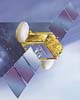
The successful launch Thursday of India's heaviest satellite from spaceport of Kourou in French Guyana may have boosted the country's space research efforts to yet another level, but it has also lifted the spirits of at least three Direct-To-Home televisions broadcasters, one of which has been waiting for years to launch its services in India. |
|
|

|
|
|
|
|
|
|
|
|
|
|
|
| The content herein, unless otherwise known to be public domain, are Copyright 1995-2006 - SpaceDaily.AFP and UPI Wire Stories are copyright Agence France-Presse and United Press International. ESA PortalReports are copyright European Space Agency. All NASA sourced material is public domain. Additionalcopyrights may apply in whole or part to other bona fide parties. Advertising does not imply endorsement,agreement or approval of any opinions, statements or information provided by SpaceDaily on any Web page published or hosted by SpaceDaily. Privacy Statement |

