|
 |
 |
 |
 |
 |
 |
 |
 |

 |
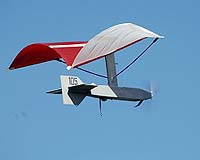
Cyber Defense's CyberBug UAV Participates In NATO Exercises
St. Petersburg FL (SPX) Dec 13, 2006 Cyber Defense Systems is pleased to announce that its CyberBug small unmanned air vehicles recently participated in NATO and various other military exercises around the world. The CyberBug is a high tech asset for military, law enforcement and commercial applications. The unmanned air vehicles can be assembled in minutes and provide instant aerial surveillance. The vehicles fly for up to an hour and transmit video and data to a portable ground control station. The CyberBug operator can safely monitor dangerous events, see around buildings, over hills and beyond line of sight. Applications include search and rescue, traffic monitoring, environmental research, border patrol and more. Three large CyberBugs were employed to support Navigation Warfare scenarios during Trial "Spartan Hammer", a 12-nation NATO collaborative effort conducted from November 5-15, 2006 in western Greece. A variety of sensor payload configurations were carried aboard the CyberBugs that collected information used to support signals intelligence and electronic warfare campaigns. A total of 22 sorties were flown with a 100% mission completion rate. CyberBug unmanned air vehicles patrolled the skies over Avon Park, Florida during Atlantic Strike IV, a joint Air Force, Navy and Marine exercise that involved more than 700 service members. CyberBugs conducted 18 sorties to locate snipers, access air strike damage, follow convoys and monitor the battlefield. CyberBugs transmitted live video to Joint Terminal Air Controllers and to soldiers on the ground, increasing situational awareness and demonstrating their ability to save lives on the battlefield. This was the third Atlantic Strike exercise for the CyberBug. Cyber Defense Systems manufactures CyberBug unmanned air vehicles in several sizes to meet most mission requirements. The new Micro CyberBug is highly portable, weighing only 2.5 pounds and fitting into a backpack with room to spare. The Medium CyberBug represents an effective mix of performance and size, weighing only 8.5 pounds and flying for more than an hour. The Large CyberBug weighs 14.5 pounds and accommodates larger payloads. Cyber Defense is currently under contract to design and build a 42 pound CyberBug capable of carrying a twelve pound payload for up to two hours with the option to exchange payload for fuel for a total flight time of approximately 8 hours. Second generation enhancements include faster assembly, rugged environmental sealing, transparent wing materials for stealth and powerful new tracking and targeting features. CyberBug operators can now lock the vehicle pan/tilt camera onto stationary or moving targets. The targets geo-location can even be resolved with an accuracy of 3-5 meters. These new features represent a merger of big UAV capability in a small UAV package. Community Email This Article Comment On This Article Related Links Cyber Defense UAV Technology at SpaceWar.com UAV News - Suppliers and Technology
 NGC-Led Joint Industry-U.S. Army Team Receives Award For Hunter UAS Demonstration
 San Diego CA (SPX) Dec 12, 2006
Northrop Grumman joint industry-U.S. Army team has been honored as the winner of the 2007 Integrator of the Year Award by Shephard Group, publisher of Defence Helicopter and Unmanned Vehicles magazine, for its work on a demonstration involving the Hunter unmanned aerial system (UAS). |
|
|

| The content herein, unless otherwise known to be public domain, are Copyright 1995-2006 - SpaceDaily.AFP and UPI Wire Stories are copyright Agence France-Presse and United Press International. ESA PortalReports are copyright European Space Agency. All NASA sourced material is public domain. Additionalcopyrights may apply in whole or part to other bona fide parties. Advertising does not imply endorsement,agreement or approval of any opinions, statements or information provided by SpaceDaily on any Web page published or hosted by SpaceDaily. Privacy Statement |