|
 |
 |
 |
 |
 |
 |
 |
 |

 |
Cruising For A Space Flight
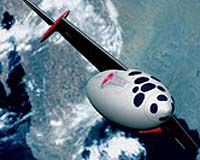
RIA Novosti political commentator Moscow (UPI) Feb 02, 2007 The Russian-U.S. manned program, which just now pulled out of its critical nosedive with tremendous pain, and which is the only one in the world except for China's, badly needs experienced and practiced professionals rather than amateurs. Comparing the Russian and American spacecraft, veteran Russian cosmonaut Musa Manarov said: "Our system differs from theirs, but both have their pluses and minuses. In general, G-forces are high in both cases. "Our descent is steeper but shorter, while a U.S. shuttle, although following a gentler slope, provides a longer experience of its 'pleasures.' One day I rode a shuttle centrifuge long enough to get sick. Our descent is also psychologically trying for those unfamiliar with it. "You may remember Tito saying upon landing that he felt he had been to Paradise. I know for sure what kind of paradise he meant: he was glad to be alive. Our descent is very impressive: flames from the burning envelope, shots, jerks from opening parachutes, and tremendous shaking at the end. Sky divers will understand me: when you are landing you try to cushion the shock with your feet, but the impact is still felt. Here you are falling on your back. So the demands on, for example, the spine are very high." In other words, "this is not a jaunt aboard an airliner with a stewardess and a glass of champagne" to the Canary Islands or the Caribbean. But what about the $20 million sum Roskosmos, the Russian Federal Space Agency, gets for flying tourists to the ISS? This money comes in very handy in the modest Russian space budget, very handy indeed. But the end does not always justify the means, if only, in this instance, for the reasons mentioned by Manarov. Moreover, arithmetic suggests that four tourists over a span of six years, though a worthwhile addition, cannot be viewed as a sizeable contribution to the Russian space effort. On the other hand, space tourism could become a good money earner in the future. These profitable flights would be shorter than those to the ISS, yet many times safer and cheaper. I am referring to suborbital tourist flights during which a module containing adrenaline-seekers flies in the lower boundaries of space for 5 to 7 minutes, and everyone is happy about experiencing weightlessness. The practical-minded Americans passed a special law two years ago allowing private initiatives to organize suborbital flights on non-governmental craft at their own risk and peril. The effort met with a good response. Today, Virgin Galactic, a company that does not even have its own craft in the design stage, has managed to sell 200 tickets to space, each priced at $200,000. It has cleared $40 million without taking any risks or holding any talks with partners. That's it. But already Russia's Myasishchev Experimental Engineering Plant has come up with detailed plans for an aerospace system, based on the M-55 high-altitude plane, that is meant for suborbital tourist flights. Moreover, the project is being sponsored by Roskosmos and so is part of the official space program. We therefore see that Russia needs only American wisdom to rid its space research program of deadwood, and spare space tourists from excessive G-loads. (Andrei Kislyakov is a political commentator for the RIA Novosti news agency. The opinions expressed in this article are those of the author and may not necessarily represent those of RIA Novosti. This article is reprinted by permission of RIA Novosti.)
Source: United Press International Community Email This Article Comment On This Article Related Links News About Space Exploration Programs All about Space Tourism and more at Space-Travel.Com Space Tourism, Space Transport and Space Exploration News
 Space Commercialization Contracts Signed
 Washington (UPI) Feb 01, 2007
NASA says it has signed a space commercialization contract with PlanetSpace Inc. of Chicago and the Transformational Space Corp. of Reston, Va. NASA said the agreements signed Wednesday are designed to facilitate the commercialization of low-Earth orbit as capabilities are developed to transport goods and people to orbital destinations. |
|
|

| The content herein, unless otherwise known to be public domain, are Copyright 1995-2006 - SpaceDaily.AFP and UPI Wire Stories are copyright Agence France-Presse and United Press International. ESA PortalReports are copyright European Space Agency. All NASA sourced material is public domain. Additionalcopyrights may apply in whole or part to other bona fide parties. Advertising does not imply endorsement,agreement or approval of any opinions, statements or information provided by SpaceDaily on any Web page published or hosted by SpaceDaily. Privacy Statement |