|
 |
 |
 |
 |
 |
 |
 |
 |

 |
Crews Test Latest Stryker Vehicle
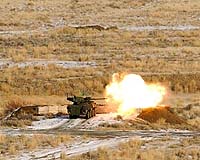
Fort Lewis WA (AFNS) Dec 21, 2006 Under the watchful eyes of everyone from TRADOC to General Dynamics Land Systems, Mobile Gun System crews from the 1st Battalion, 38th Infantry had the opportunity Sunday to put the latest variant of the Stryker to the test on Yakima's Range 10. A cluster of CONEXs served as a makeshift range tower on a hilltop overlooking the seldom-used range. Infrared cameras and audio equipment recorded the engagements of each of the battalion's nine crews. "This is the first MGS gunnery in the Army, period," said Sgt. 1st Class Michael Pratt, the brigade master gunner. To that end, the range was refurbished to meet the needs of the new vehicle. "Range to targets is a lot shorter. Most of the ranges that are set up for tanks can't accommodate this yet, so we have to set up a lot of temporary target pits to bring the target array in closer." Pratt said. "We have a lot more RPG team and ten-man infantry squad targetry, which you don't see on a regular tank range. "Also, we're using canister rounds which you don't have on a tank. We've been working on this a good six months," he said. The unit is the last battalion from the 4th Brigade, 2nd Inf. Division to conduct crew live-fire qualification; 2-23 Inf. and 4-9 Inf. already completed the training. Pratt noted that so far the brigade has done well, with about 90 percent of the crews qualifying on their first attempt. At the end of the gunnery exercise, each battalion will have fired about 60 main gun rounds, 6,000 .50-caliber rounds and 15,000 7.62 mm rounds on the various tables. The crews themselves have responded positively to the vehicle. "It's a good vehicle; it handles well and the fire control system is fine. We haven't had too many problems with our vehicle. I like it. They definitely need to keep it," said Staff Sgt. Larry Wisor, a vehicle commander in C Company. Wisor's driver, Spc. Vincent Blachuta, noted that the vehicle had some issues with storage and could use some sort of backup warning device, like those on some SUVs that detect obstacles behind the vehicle, but that overall he was pleased with the MGS. "It exceeded my expectations. It's a little slow going up hills, but it rides nice. All in all, it performs really well, but I haven't been on it long enough to say it's perfect," he said. The 4th Bde. will be the first unit to use the vehicle in combat, and expectations are high. "It's going to be a good asset for the brigade as an infantry-support vehicle. We've still got a few little kinks to work out, and I know they're working hard on it right now, but it's almost there," said Pratt. Community Email This Article Comment On This Article Related Links The latest in Military Technology for the 21st century at SpaceWar.com The latest in Military Technology for the 21st century at SpaceWar.com
 New Antenna Begins Testing
 New Boston AFB NH (AFNS) Dec 21, 2006
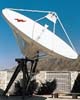
The 23rd Space Operations Squadron here began operations confidence testing of its newest Air Force Satellite Control Network antenna Dec. 14. Operational testing will verify the antenna is fully prepared to conduct satellite supports as part of the squadron's 24-hour mission, said station manager Bill Rayfield. |
|
|

| The content herein, unless otherwise known to be public domain, are Copyright 1995-2006 - SpaceDaily.AFP and UPI Wire Stories are copyright Agence France-Presse and United Press International. ESA PortalReports are copyright European Space Agency. All NASA sourced material is public domain. Additionalcopyrights may apply in whole or part to other bona fide parties. Advertising does not imply endorsement,agreement or approval of any opinions, statements or information provided by SpaceDaily on any Web page published or hosted by SpaceDaily. Privacy Statement |