|
 |
 |
 |
 |
 |
 |
 |
 |

 |
Could Hairy Roots Become Biofactories
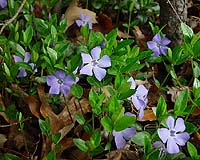
Houston TX (SPX) Oct 31, 2007 Rice University bioengineers have reported an advance in tapping the immense potential of "hairy roots" as natural factories to produce medicines, food flavorings and other commercial products. The study is available online and slated to appear in the November/December issue of the American Chemical Society's bi-monthly journal Biotechnology Progress. "The species of periwinkle that we're studying produces a wide variety of alkaloids -- including the anti-cancer drugs vincristine and vinblastine," said study co-author Ka-Yiu San. "Hairy roots have a number of advantages over cell cultures as a production platform for these compounds." Hairy roots are a type of tumor that forms on plants infected by the soil bacterium Agrobacterium rhizogenes. By inserting a specific gene into the bacterium, researchers can integrate that gene into the host plant's DNA. Eventually, the host develops a system of fuzzy-looking roots near the site of the infection. These so-called "hairy roots" are transgenic, meaning they contain the genes of both the host plant and the bacterium. Scientists believe they can create hairy roots that churn out the product of inserted genes with a stability and productivity not possible with most other plant cell cultures. San '78, Rice's E.D. Butcher Professor of Bioengineering, said scientists have long wanted to harness the production prowess of hairy roots for industry, but first they must determine the long-term stability of the genetically altered roots. In the new study, San and Rice graduate student Christie Peebles described the methods they used to keep a transgenic hairy root culture alive for 4-and-a-half years. At the outset, they infected a periwinkle plant with a bacterium carrying a gene for fluorescence. By transferring root tips into fresh liquid every four weeks, they maintained a stable root culture that had the characteristic fluorescent glow produced by the gene. Ultimately, San and his collaborators hope to make genetic modifications to the metabolic pathways of the transgenic periwinkle roots, changes that will allow them to produce far more vincristine and vinblastine than is normally produced by a regular periwinkle plant. Study co-authors include Iowa State University's Jacqueline Shanks, adjunct professor of bioengineering at Rice, and plant biologist Susan Gibson of the University of Minnesota. Community Email This Article Comment On This Article Related Links Rice University Darwin Today At TerraDaily.com
 Dead Clams Tell Many Tales
 Chicago IL (SPX) Oct 31, 2007
Inventories of living and dead organisms could serve as a relatively fast, simple and inexpensive preliminary means of assessing human impact on ecosystems. The University of Chicago's Susan Kidwell explains how measuring the degree of live-dead mismatch could be used as an ecological tool in the Oct. 26 early online edition of the Proceedings of the National Academy of Sciences. |
|
|

| The content herein, unless otherwise known to be public domain, are Copyright 1995-2007 - SpaceDaily.AFP and UPI Wire Stories are copyright Agence France-Presse and United Press International. ESA Portal Reports are copyright European Space Agency. All NASA sourced material is public domain. Additional copyrights may apply in whole or part to other bona fide parties. Advertising does not imply endorsement,agreement or approval of any opinions, statements or information provided by SpaceDaily on any Web page published or hosted by SpaceDaily. Privacy Statement |