|
 |
 |
 |
 |
 |
 |
 |
 |

 |
Convergent Evolution Of Molecules In Electric Fish
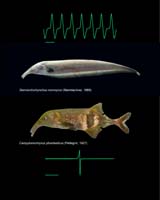
Austin TX (SPX) Mar 06, 2006 Having a set of extra genes gave fish on separate continents the ability to evolve electric organs, report researchers from The University of Texas at Austin. Dr. Harold Zakon and colleagues, in a paper recently published in Proceedings of the National Academy of Sciences, show that African and South American groups of fish independently evolved electric organs. They achieved this by modifying sodium channel proteins typically used in muscle contraction. But fish have two copies of many of their genes, and Zakon found that the duplicate sodium channel gene could mutate and evolve without harming the fish. "The spare gene gave [the electric fish] a little bit of evolutionary leeway," says Zakon, professor of neurobiology. "This is really one of the first cases that the ancestral gene duplication in fish has actually been linked to a gene that has been freed up and evolving in accordance with a 'new lifestyle.'" Zakon and colleagues looked at two sodium channel genes in the electric organs and muscles in electric and non-electric fish. Electric fish use their electric organs, which are modified muscles, to communicate with each other and sense their environment. The researchers found that electric fishes expressed one of the sodium channel genes in their electric organs only, while non-electric fish express both genes in their muscles. "Most fish have both genes in the muscle, but as the new electric organ was evolving, the sodium channel�by being lost from the muscle�became devoted to the electric organ," Zakon says. "So two times, independently, the gene has been 'lost' from the muscle. It's no longer able to turn on in a cell that for millions of years it turned on in, and now it's turning on in this new organ." When the research team looked at the sodium channel protein sequences, they found that some of the mutations occurred at the same or very close to sites in the protein where mutations have been shown to cause disease in humans. "Functionally important parts of this molecule are changing in order to change the electrical discharge in the fish�changes that would be detrimental in a human muscle," says Zakon. Looking at the convergent evolution of sodium channels in these fish helps neurobiologists identify important parts of these proteins relevant to human health, adds Zakon. "When natural selection is acting to cause changes in a part of a molecule, you know it's functionally important," he says. "Natural selection can start showing you the important parts of molecules. We took the evolutionary approach, which is very compatible with the clinical approach." The research team included evolutionary biologist Dr. David Hillis, graduate student Derrick Zwickl and research associate Ying Lu. Community Email This Article Comment On This Article Related Links University of Texas at Austin Darwin Today At TerraDaily.com
 Mass Migration Of Mormon Crickets Driven By Hunger Fear
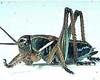 Kent OH (SPX) Mar 06, 2006
An international team of researchers, including Kent State University professor Dr. Patrick D. Lorch, have revealed the motivating factors behind the seasonal mass migration of Mormon crickets in western North America. The scientists report hunger for protein and salt, and a fear of cannibalism, drives the mass migration of Mormon crickets in western North America. |
|
|

| The content herein, unless otherwise known to be public domain, are Copyright 1995-2006 - SpaceDaily.AFP and UPI Wire Stories are copyright Agence France-Presse and United Press International. ESA PortalReports are copyright European Space Agency. All NASA sourced material is public domain. Additionalcopyrights may apply in whole or part to other bona fide parties. Advertising does not imply endorsement,agreement or approval of any opinions, statements or information provided by SpaceDaily on any Web page published or hosted by SpaceDaily. Privacy Statement |