|
 |
 |
 |
 |
 |
 |
 |
 |

 |
Comets Break Up Far And Near
Pasadena (JPL) Sep 11, 2002 Some comets may break apart over and over again in the farthest reaches of the solar system, challenging a theory that comets break up only occasionally and not too far from the Sun, says a researcher from NASA's Jet Propulsion Laboratory, Pasadena, Calif. A system of comets called "sungrazers," named for their orbit that closely brushes the Sun, reveals important clues about how these bodies break up. Most sungrazing comets are tiny -- the smallest could be less than 10 meters (30 feet) across -- and move in a highway-like formation of comets that pass near the Sun and disintegrate. Dr. Zdenek Sekanina, senior research scientist at JPL, reports in the September 10 issue of the Astrophysical Journal that many sungrazer comets arrive at the Sun in clusters and on parallel paths. He emphasizes that such tiny fragments would have disintegrated if they had come so close to the Sun on an earlier trip. Therefore, the parents of these tiny sungrazers must have broken up after their previous encounter with the Sun and continued to break up far from the Sun on their journey through the solar system. Sekanina's sungrazer studies challenge an earlier theory that the only place these comets break up is very close to the Sun, as the strong pull of its gravity cracked their loosely piled chunks of dust and ice. The gradual, continuing fragmentation gives birth to all the sungrazers, the most outstanding examples of splitting comets. "Astronomers never before realized that there could be a fairly orderly pattern in breaking up, so that one comet cascades into large families of smaller comets, and that this process could be an important part of a comet's natural life cycle," Sekanina said. Sungrazers are not the only comets that can break up far from the Sun. Sekanina points to new observations of comet 57P/du Toit-Neujmin-Delporte, whose fragmentation has led to the formation of a similar, though less prominent, highway of tiny comets. All fragments separated from the comet beyond the orbit of Mars. Images taken by the European Space Agency's and NASA's Solar and Heliospheric Observatory have shown the many tiny sungrazing comets. A movie showing two of these comets can be found here. Nearly seven years' worth of images from the solar observatory revealed more than 400 sungrazers in the Sun's immediate neighborhood. Sekanina estimates that currently there may be as many as 200,000 sungrazer comets the size of the ones the observatory detected. The Solar and Heliospheric Observatory is a project of international cooperation between the European Space Agency and NASA. The spacecraft is part of the International Solar- Terrestrial Physics program, a global effort to study the interaction of Sun and Earth. The instrument that observed the comets was developed at the U.S. Naval Research Laboratory, Washington, with collaborators in the United Kingdom, France and Germany. JPL, a division of the California Institute of Technology in Pasadena, manages the Planetary Atmospheres program for NASA's Office of Space Science, Washington. Community Email This Article Comment On This Article Related Links SpaceDaily Search SpaceDaily Subscribe To SpaceDaily Express Asteroid and Comet Mission News, Science and Technology
 NASA'S Spitzer Finds Possible Comet Dust Around Dead Star
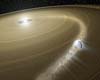 Pasadena CA (SPX) Jan 12, 2006
NASA's Spitzer Space Telescope has spotted what may be comet dust sprinkled around the white dwarf star G29-38, which died approximately 500 million years ago. |
|
|

| The content herein, unless otherwise known to be public domain, are Copyright 1995-2006 - SpaceDaily.AFP and UPI Wire Stories are copyright Agence France-Presse and United Press International. ESA PortalReports are copyright European Space Agency. All NASA sourced material is public domain. Additionalcopyrights may apply in whole or part to other bona fide parties. Advertising does not imply endorsement,agreement or approval of any opinions, statements or information provided by SpaceDaily on any Web page published or hosted by SpaceDaily. Privacy Statement |