|
 |
 |
 |
 |
 |
 |
 |
 |

 |
Comet Chaser Ships to the Cape For July 1 Launch
Laurel - Apr 23, 2002 All packed up and ready for its long-awaited trip, NASA's Contour spacecraft left home in Maryland today for Cape Canaveral, Fla., site of its scheduled July 1 launch toward an unprecedented comet study. Secured in an air-ride, climate-controlled shipping container, Contour set out from NASA's Goddard Space Flight Center in Greenbelt and will reach Cape Canaveral Air Force Station/Kennedy Space Center later this week. Contour -- short for Comet Nucleus Tour -- had spent the past eight weeks being baked, frozen, spun, shaken and probed in Goddard's test facilities, getting a dose of the conditions it will face during launch and in space. "Our spacecraft is ready and the team is anxious to start final preparations for launch," says Contour Project Manager Mary C. Chiu, of the Johns Hopkins University Applied Physics Laboratory in Laurel, Md., which designed and built the compact 8-sided, 6-foot by 7-foot spacecraft. After a predawn launch aboard a Boeing Delta II rocket, Contour will encounter two very different comets as they zoom through the inner solar system. From as close as 60 miles (about 100 kilometers) away, the spacecraft will snap the sharpest pictures yet of a comet's nucleus, map the types of rock and ice on the surface and analyze the surrounding gas and dust. Contour's target comets include Encke in November 2003 and Schwassmann-Wachmann 3 in June 2006, though the mission team can steer the solar-powered probe toward a scientifically attractive "new" comet should the opportunity arise. "Contour will provide the most detailed data yet on these ancient building blocks of the solar system," says Dr. Joseph Veverka, the mission's principal investigator from Cornell University, Ithaca, N.Y. "By studying at least two comets, we'll be able to assess their diversity and begin to clear up the many mysteries of how comets evolve." Community Email This Article Comment On This Article Related Links Contour The Applied Physics Laboratory at the Johns Hopkins University SpaceDaily Search SpaceDaily Subscribe To SpaceDaily Express Asteroid and Comet Mission News, Science and Technology
 NASA'S Spitzer Finds Possible Comet Dust Around Dead Star
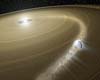 Pasadena CA (SPX) Jan 12, 2006
NASA's Spitzer Space Telescope has spotted what may be comet dust sprinkled around the white dwarf star G29-38, which died approximately 500 million years ago. |
|
|

| The content herein, unless otherwise known to be public domain, are Copyright 1995-2006 - SpaceDaily.AFP and UPI Wire Stories are copyright Agence France-Presse and United Press International. ESA PortalReports are copyright European Space Agency. All NASA sourced material is public domain. Additionalcopyrights may apply in whole or part to other bona fide parties. Advertising does not imply endorsement,agreement or approval of any opinions, statements or information provided by SpaceDaily on any Web page published or hosted by SpaceDaily. Privacy Statement |