|
 |
 |
 |
 |
 |
 |
 |
 |

 |
Combating Land Warfare Threats In The 21st Century Part Three
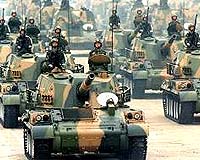
Washington (UPI) Feb 18, 2008 The idea of a major land war similar in scale to the great battles of World War II, or even the 1980-88 Iran-Iraq War has largely been discounted by political pundits in the United States and by current and co would-be policymakers in both the Republican and Democratic parties. However, it is striking that none of these prophets in their own imagination ever refer to the very clear pattern of arms acquisitions of Russia, China and India, the three main land powers on the Asiatic land mass. Yet the first decade of the 21st century has so far been marked by the slow but steady and relentless upgrading of the capabilities of all three powers to wage land war on a scale the Eurasian land mass has not seen in more than 60 years. As we have noted in recent columns, India in December 2007 closed a deal with Russia to buy 347 more T-90S Main Battle Tanks in addition to the 310 it purchased in 2001. The potential enemy the Indian army would have to face is quite clear: It would be it traditional enemy Pakistan, whose future looks increasingly unpredictable and unstable given the growth of extreme Islamist elements in popularity and political credibility, the assassination of former Prime Minister Benazir Bhutto and the increasingly uncertain future of current President Pervez Musharraf. Russia certainly does not factor as a likely enemy of India in any foreseeable scenario. The two great nations have no areas of significant strategic conflict in the foreseeable future, and their alliance, transcending the vastly different political systems and political cultures they have, has now endured for more than 40 years. India's relations with the United States have warmed dramatically over the past decade, and that process has steadily continued under both Republican and Democratic presidents in Washington and under Bharatiya Janata Party and Congress-UPA-led coalition governments in New Delhi, so the process enjoys bipartisan blessing on both sides. Nevertheless, the energy and resources the Indians are investing in building up their conventional political power should serve notice that India is not going to be content to follow U.S. wishes on a wide range of security issues in South Asia but will be determined to have the power to act independently on its own behalf. Despite the prognostications of doom by some Washington pundits, a China-India serious clash that could lead to direct armed hostilities seems extremely unlikely in the foreseeable future as well. Both countries face far more immediate security challenges -- India with Pakistan and China with Taiwan. And both of them therefore share a strong vested interest in keeping their rears safe and avoiding conflicts on multiple fronts. As we have noted in previous columns, China's primary investment has been in building up missile, air and naval systems that could contest the U.S. armed forces in the Western Pacific in any contest over Taiwan. It is noteworthy that the Chinese have also put emphasis on holding military exercises involving amphibious landings on hostile shores -- a capability that would be most obviously relevant to threaten Taiwan. Yet China has been seeking to build up its conventional land forces, too. Next: Why China wants a large land army Community Email This Article Comment On This Article Related Links The latest in Military Technology for the 21st century at SpaceWar.com
 DRS Tech Gets Contract To Supply Marine Corps With Rugged Tablet Computers
 Parsippany NJ (SPX) Jul 10, 2007
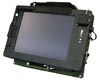
DRS Technologies has received a $5 million award as part of a previous contract to provide military rugged tablet (MRT) computers and peripheral equipment for the U.S. Marine Corps' Target Location Designation Handoff System (TLDHS) program. DRS received the order from Stauder Technologies in St. Peters, Missouri. For this contract the company's DRS Tactical Systems business unit in Melbourne, Florida, will produce hundreds of the handheld MRT computers and peripheral equipment. |
|
|

| The content herein, unless otherwise known to be public domain, are Copyright 1995-2007 - SpaceDaily.AFP and UPI Wire Stories are copyright Agence France-Presse and United Press International. ESA Portal Reports are copyright European Space Agency. All NASA sourced material is public domain. Additional copyrights may apply in whole or part to other bona fide parties. Advertising does not imply endorsement,agreement or approval of any opinions, statements or information provided by SpaceDaily on any Web page published or hosted by SpaceDaily. Privacy Statement |