|
 |
 |
 |
 |
 |
 |
 |
 |

 |
ComEd Utilises Environmentally Friendly Soy Oil Transformers
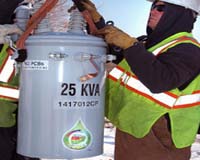
Chicago IL (SPX) Feb 18, 2008 ComEd has begun using pole-top transformers filled with a home-grown renewable source - soybean oil - as part of a new commitment to benefit the environment, customers, and Illinois soybean farmers. The utility installed its first new pole-top transformer with soy oil insulation fluid instead of commonly used petroleum-based mineral oil near Mokena, Ill., after receiving its first shipment of Envirotran FR3 transformers this month from Cooper Power Systems. On an annual basis, ComEd plans to buy about 4,000 of the transformers, becoming the fourth largest purchaser of them in the country. They will be installed where construction is required for new customers on ComEd's distribution system and when overhead transformers need to be replaced. "We are reducing the impact of our operations on the environment while maintaining our commitment to safe and reliable service," said Michael McMahan, ComEd vice president of Engineering and Project Management. "Soy oil is from a renewable resource - soybeans. And unlike mineral oil, soy oil is almost 100 percent biodegradable." The use of soy oil is part of a comprehensive environmental strategy to reduce greenhouse gas emissions and lower the carbon footprint of Exelon, its subsidiaries and customers. ComEd is launching a yearlong "12 Ways to Green" campaign this month to help raise awareness among customers about energy efficiency and other environmental initiatives. ComEd is reducing its climate impact through a variety of other initiatives including using hybrid vehicles and vehicles that run on alternative fuels, reducing energy consumption at its facilities, and recycling.
Cuts carbon footprint by more than 5,500 tons
Transformers with soy oil expected to last longer, save money
Illinois soybean farmers to benefit "Our standard transformers operate safely and efficiently, but we are always looking for ways to improve our performance," said McMahan. "We've been using soy oil in transformers mounted on the ground and in vaults for several years and have experienced good operational performance. We hope these new overhead transformers will not only provide environmental and safety benefits, they will result in fewer outages for our customers." Community Email This Article Comment On This Article Related Links
 Agency urges US to use pricing to fight energy woes
 Washington (AFP) Feb 15, 2008
The International Energy Agency on Friday called on the United States to do more to curb energy use and fight global warming, saying pricing was the best way to curb demand. |
|
|

| The content herein, unless otherwise known to be public domain, are Copyright 1995-2007 - SpaceDaily.AFP and UPI Wire Stories are copyright Agence France-Presse and United Press International. ESA Portal Reports are copyright European Space Agency. All NASA sourced material is public domain. Additional copyrights may apply in whole or part to other bona fide parties. Advertising does not imply endorsement,agreement or approval of any opinions, statements or information provided by SpaceDaily on any Web page published or hosted by SpaceDaily. Privacy Statement |