
 |
 |
 |
 |
 |
 |
 |
 |
 |

 |
Climate change: Floods, drought, mosquito disease aim at Europe
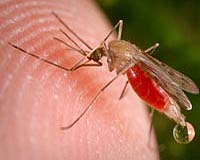
Paris (AFP) Sept 29, 2008 Climate change will amplify the risk of flooding in northwestern Europe, water scarcity and forest fires on the northern Mediterranean rim and bring milder winters to Scandinavia, the European Environment Agency (EAA) said on Monday. Higher temperatures will also extend the habitat range of virus-carrying mosquitoes, including the Asian tiger mosquito which carries the chikungunya virus and other pathogens, it said. "Many regions and sectors across Europe are vulnerable to climate change impacts," Jacqueline McGlade, executive director of the Copenhagen-based EAA, said in a press release. "Implementation of adaptation actions has only just started. We need to intensify such actions and improve information exchange on data, effectiveness and costs." The report is an update of a 2004 assessment on Europe's exposure to climate change. It is an overview of data drawn mainly from the EAA's own resources and the UN's Intergovernmental Panel on Climate Change (IPCC). The EAA said the warming trend in Europe was above the global average. Since pre-industrial times, Europe's landmass has warmed by 1.0 degrees Celsius (1.8 degrees Fahrenheit) and the seas around it by 1.2 C (2.16 F), compared with a global mean of 0.8 C (1.44 F) and 1.0 C (1.8 F) respectively, it said. "Projections suggest further temperature increases in Europe between 1.0 and 5.5 C (1/8-9.9 F) by the end of the century," said the report. "More frequent and more intense hot extremes and a decreasing number of cold extremes have occurred the past 50 years, and this trend is projected to continue." In 2007, the IPCC gave an estimate of a global rise in temperature this century of 1.8-4.0 C (3.24-7.2 F). The report said Europe's climate was already being affected by warming in several ways. Snow cover has decreased by 1.3 percent per decade in the last 40 years, and Greenland is being affected by ice-sheet loss. There have been several major droughts in the past few decades, including the catastrophic heatwave in 2003 that claimed tens of thousands of lives in continental Europe, and water shortages that gripped Spain and Portugal in 2005. Among wildlife, some species of birds, insects and mammals are moving northwards and uphill to escape higher temperatures, and sub-tropical species of fish are showing up in European waters with increasing frequency. On the plus side, more carbon dioxide (CO2) in the air is helping forests, which in most cases are growing faster now than a century ago, it said. Looking to the future, the report also made these points: -- STORMS: The strongest storms are likely to get stronger, but they will be slightly less frequent. -- FLOODS: Flooding is projected to occur more frequently in many regions, particularly in winter and spring, with northwestern and central and eastern Europe most vulnerable. -- HEALTH: Heatwaves, mosquito-borne viruses and water-borne diseases are among the panoply of challenges to health from warming. "The risk is very dependent on human behaviour and the quality of health care services and their ability to detect early and act," the report warns. -- COSTS: Many costs are likely to be substantial, although an accurate figure cannot be placed upon them. These include the bills from biodiversity loss, from the loss of hydropower and ski tourism as a result of changed rainfall and snowfall patterns, damage to agriculture from heatwaves and coastal erosion caused by rising sea levels. Community Email This Article Comment On This Article Share This Article With Planet Earth
Related Links Epidemics on Earth - Bird Flu, HIV/AIDS, Ebola
 Toll rises to 121 in Uganda hepatitis epidemic
 Kampala (AFP) Sept 4, 2008
A hepatitis E epidemic has killed 121 people in northern Uganda, where it erupted in October last year, a health ministry official said Thursday. |
|
|

| The content herein, unless otherwise known to be public domain, are Copyright 1995-2007 - SpaceDaily.AFP and UPI Wire Stories are copyright Agence France-Presse and United Press International. ESA Portal Reports are copyright European Space Agency. All NASA sourced material is public domain. Additional copyrights may apply in whole or part to other bona fide parties. Advertising does not imply endorsement,agreement or approval of any opinions, statements or information provided by SpaceDaily on any Web page published or hosted by SpaceDaily. Privacy Statement |
 del.icio.us
 Digg
Digg Reddit
 YahooMyWeb
 Google
 Facebook