|
 |
 |
 |
 |
 |
 |
 |
 |

 |
Climate change: Arctic went from greenhouse to icehouse
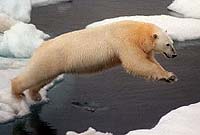
Paris (AFP) May 31, 2006 Dramatic shifts in Earth's climate system drove the sea at the North Pole from sub-tropical temperatures to icy chill in the relatively brief span of 10 million years, a series of studies published on Thursday says. The papers report a mission in which European scientists aboard a drillship braved flowing walls of ice to delve deep into the Lomonosov ridge on the floor of the Arctic Ocean. The precious cores of sediment, retrieved from up to 430 metres (1,397 feet) below the sea bed, give an idea of the planet's climate going back 55 million years thanks to the fossilised creatures, plants and stones buried in them. This surveyed period kicks off with an astonishingly warm period called the Palaeocene-Eocene thermal maximum. At one point during this era, the Arctic Ocean was 23 C (73 F) -- the same temperature as a tepid bath. Then, around 49 million years ago, large volumes of cool freshwater for some reason were dumped into the Arctic, chilling the sea to around 10 C (50 F) and diluting its saltiness so much that in summer months, a species of green freshwater fern covered much of its surface. At 45 million years ago, the first ice started to form, as evidenced by pebbles dropped by icebergs, and the relative cooling has continued to the modern era. The studies, published in the weekly British journal Nature, were carried out in an initiative called Arctic Coring Expedition (ACEX). A Swedish-flagged, Norwegian-operated drillship, the Vidar Viking, manoeuvred in water 1,000 metres (3,250 feet) deep just 238 kilometers (148 miles) from the North Pole, protected by a Russian and a Swedish icebreaker. "At times, the drill site was covered with ice two to three metres (seven to 10 feet) thick," said one of the lead authors, Jan Blackman, a professor at Stockholm University. "We encountered an iceflow of multi-year ice, harder and denser than ice from just one Arctic winter. It was like driving into a brick wall." In a history spanning some 4.5 billion years, Earth has gone through natural shifts in climate change. The drivers for this include changes in solar radiation, surges in volcanic activity, releases of methane stored underground, shifts in vegetation and the light that is reflected back into space by polar icecaps. The study delves into the distant past and does not cover recent history, especially the Industrial Revolution, whose fossil-fuel emissions are blamed for global warming. Evidence has accumulated in recent years that Arctic ice cover is thinning and shrinking in response to this warming, which in turn may have a big impact on polar bears and other species. The icecap at the North Pole floats on the Arctic Ocean, which means its melting does not affect global sea levels. In Antarctica, it lies mainly on rock, which means that even a partial melting would threaten coastal cities and deltas around the world. Community Email This Article Comment On This Article Related Links Climate Science News - Modeling, Mitigation Adaptation
 Climate change could fuel fiercer hurricane cycles: researchers
 Washington (AFP) May 31, 2006
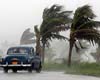
 Human-induced climate change could be fueling increasingly active and deadly hurricane cycles, US researchers said, a day ahead of the official Atlantic hurricane season's start on Thursday. |
|
|

| The content herein, unless otherwise known to be public domain, are Copyright 1995-2006 - SpaceDaily.AFP and UPI Wire Stories are copyright Agence France-Presse and United Press International. ESA PortalReports are copyright European Space Agency. All NASA sourced material is public domain. Additionalcopyrights may apply in whole or part to other bona fide parties. Advertising does not imply endorsement,agreement or approval of any opinions, statements or information provided by SpaceDaily on any Web page published or hosted by SpaceDaily. Privacy Statement |