|
 |
 |
 |
 |
 |
 |
 |
 |

 |
Climate: Why Can't We Just All Get Along?
Boulder CO (UPI) May 24, 2004 You can't follow the issue of global warming for very long without wondering what are the facts the climate debate, and where those facts leave off and interpretations begin. The confusion is understandable. Radio talk show host Rush Limbaugh's listeners probably think the issue of a warming planet is a hopeless mishmash of conflicting science forwarded by mindless ecozealots. Millions of people who will see the film, "The Day After Tomorrow," which opens this week, doubtless will come away fearful that a climate disaster awaits the next flap of a butterfly's wings. A headline last week from a scholarly Internet distribution source read, "Death Blow for Consensus Myth: Russian Researchers Question Man-Made Global Warming." The occasion for this dismissal of "consensus" on global climate change was the supposition -- incorrect, or at least premature, it turned out -- that Russia would reject the Kyoto agreement to reduce greenhouse gas emissions. The supposition arose because The Guardian of London had reported, "Leading Russian scientists told President Vladimir Putin yesterday that the Kyoto emissions treaty discriminates against Russia, would damage its economy and would not significantly reduce global warming, increasing the chance that the Kremlin will refuse to ratify the agreement." Then, later, Putin told a news conference: "We are in favor of the Kyoto process. We support it. We have a few worries about the obligations which we will have to take on." Despite the highly charged emotions from the political extremes, there is a consensus over what science is firm in the climate debate. In fact, there is surprisingly strong agreement about the scientific basis for a warming planet. There are certain facts upon which almost every scientist involved in the issue agrees. Or, perhaps it is better to say that are research results on which nearly everyone concurs. John Christy, a professor of atmospheric science at the University of Alabama at Huntsville, has produced data on warming that represent a cornerstone of the argument for climate skeptics. Christy and colleagues have analyzed satellite data that show the lower atmosphere is not warming as rapidly as the surface. Nearly every climate model predicts tropospheric and surface warming should proceed on parallel paths. So it might surprise some of those same skeptics Christy readily agrees with the Intergovernmental Panel on Climate Change's conclusion that atmospheric concentrations of carbon dioxide have increased from about 280 parts per million for most of the 20th century to abut 368 parts per million in 2000 -- a 31 percent change. Furthermore Christy agrees nearly all of this increase has resulted from human activities. Virtually every scientist involved in the issue also concedes that mean surface temperatures have increased by 0.6 degrees Celsius over the 20th century. Whither the differences? Mostly, they have arisen over interpretations of these facts -- what do the data portend for life on the planet? "The surface temperature has risen in the last hundred years," Christy told United Press International. "For the future, those who believe in climate model results suggest a more dramatic increase. I see this as a very gradual situation to which the system can adapt." "No one would disagree with the fact that human activities are causing an increase in the concentration of greenhouse gases," said Robert Balling, a climatology professor at Arizona State University. Balling is another favorite source for climate skeptics. Balling wrote "The Satanic Gases: Clearing the Air about Global Warming," in which he called climate change a vastly overrated environmental threat, whose proposed solutions are worse than the problem. "No one in the field would argue that, all things being equal, the buildup of greenhouse gases would cause the world to get warm," Balling told UPI. "But all things are not equal. There are all kinds of feedbacks that may add to or reduce the amount of warming." At the end of the day, he added, "You get consensus that once these feedbacks begin ... the buildup of greenhouse gases would overcome the negative feedbacks, and the world would warm up." Gerald Meehl, a senior scientist at the National Center for Atmospheric Research in Boulder, Colo., who worked on the IPCC assessment, told UPI climate consensus is not a myth. "That document (the IPCC report) represents the consensus view of scientists who actively work in this field." There are, in addition, a number of more specific areas in which scientists in nearly every camp agree, including: - - the "heat index" is increasing and more heat waves are likely; - - continental precipitation has increased; - - global mean sea level is rising -- though whether this is a slower, steady result of other natural processes is unknown, and - - Arctic sea ice is decreasing. Although the IPCC reported about the Arctic sea ice, Christy noted, it did not report that Antarctic sea ice is increasing. Meehl said, however, the Antarctic increase actually confirms the climate model predictions, nearly all of which show just such an increase because of Antarctica's continental isolation, strong winds and well-mixed climate. The IPCC reported consensus that the increase in the northern hemisphere surface temperatures "over the 20th century (is) greater than during any other century in the last 1,000 years." This has been challenged by some researchers, notably Willie Soon and Sallie Baliunas of Harvard University, who argue that the medieval warm period -- from about 800 A.D. to 1300 A.D. -- was warmer. A number of paleoclimatologists have challenged their methodology, however. Regarding Christy's work on tropospheric temperature data, Meehl said two independent assessments of the satellite measurements recently have been more in sync with model projections. "There are a lot of assumptions you have to make when you take the microwave sounding unit data and try to extract temperatures from it," Meehl told UPI. "The two newer products do show more warming than Christy's data showed. (They are) more in agreement with what the models were showing." Christy said he stands by his data. He said there may be physical processes that allow the atmosphere to deal with surface heat. "Evidently the atmosphere has processes within it which allow sit to release heat in an efficient way as the surface warms," he said. Tall and vigorous thunderstorms, for instance, may allow more heat to escape into space. All rights reserved. Copyright 2004 by United Press International. Sections of the information displayed on this page (dispatches, photographs, logos) are protected by intellectual property rights owned by United Press International. As a consequence, you may not copy, reproduce, modify, transmit, publish, display or in any way commercially exploit any of the content of this section without the prior written consent of by United Press International. Community Email This Article Comment On This Article Related Links SpaceDaily Search SpaceDaily Subscribe To SpaceDaily Express Earth Observation News - Suppiliers, Technology and Application
 New Legislation Initiated To Support Commercial Remote Sensing Industry
 New York NY (SPX) Jan 11, 2006
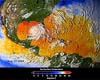
The importance of remotely sensed data and technologies to support natural disasters has prompted attention and action in Washington. New initiatives and legislation authorizing appropriations to the remote sensing industry will be discussed at Strategic Research Institute's U.S. Commercial Remote Sensing Industry conference, scheduled for February 9-10, 2006 in Washington D.C. |
|
|

| The content herein, unless otherwise known to be public domain, are Copyright 1995-2006 - SpaceDaily.AFP and UPI Wire Stories are copyright Agence France-Presse and United Press International. ESA PortalReports are copyright European Space Agency. All NASA sourced material is public domain. Additionalcopyrights may apply in whole or part to other bona fide parties. Advertising does not imply endorsement,agreement or approval of any opinions, statements or information provided by SpaceDaily on any Web page published or hosted by SpaceDaily. Privacy Statement |