|
 |
 |
 |
 |
 |
 |
 |
 |

 |
Climate Affects Recent Crop Yield Gains
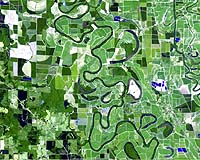
Stanford - Feb 17, 2003 Scientists at the Department of Global Ecology of the Carnegie Institution of Washington in Stanford, California, have found that climate trends significantly affect corn and soybean yields. David Lobell and Dr. Gregory Asner analyzed 17 years of data on crop yields, temperature, precipitation, and solar radiation throughout the U.S. for their study and published their results in the February 14, 2003, issue of Science. The investigation showed that gradual increases in temperature cause significant decreases in productivity for the two major United States crops, corn and soybean. "We found that climate is a surprisingly important factor in crop yield trends," stated Lobell. Most studies on climate changes and crop production have not looked at these kinds of data over this many years. Dr. Christopher Field, director of the Department of Global Ecology, noted: "What makes this study unique is that they looked at several regions that have experienced the same changes in technology, but different changes in climate. This allowed them to separate the contributions of climate and technology to yield trends, which has been hard to do in the past." When the investigators factored in climate changes over the study period, they found that the gains in crop yield from improved management practices were about 20% lower than previously believed. "Most future projections of food supply are based on recent trends in crop yield growth, ignoring the effects of climate," remarked Lobell. "But our study shows that recent trends in climate have actually helped farmers' yields, so in terms of management we may not be doing as well as we have thought." Dr. Asner added: "Our results also suggest that global warming will affect food production. If the principal corn and soybean areas of the Midwest see rising temperatures, we will likely see negative impacts on crop yields there. According to our calculations, we can expect a 17% decline in yield of these crops for a one degree increase in growing-season temperature." "The continuing growth of the human population already challenges the agricultural sector, and climate change may make efforts to increase yields even more difficult. It will take further research and collaboration between land managers, decision-makers, and scientists to meet these challenges," concluded Lobell. Community Email This Article Comment On This Article Related Links Global Ecology at Carnegie Institution of Washington SpaceDaily Search SpaceDaily Subscribe To SpaceDaily Express Dirt, rocks and all the stuff we stand on firmly
 Magnetic Reconnection Region Larger Than 2.5 Million Km Found In The Solar Wind
 Paris (ESA) Jan 12, 2006
Using the ESA Cluster spacecraft and the NASA Wind and ACE satellites, a team of American and European scientists have discovered the largest jets of particles created between the Earth and the Sun by magnetic reconnection. This result makes the cover of this week's issue of Nature. |
|
|

| The content herein, unless otherwise known to be public domain, are Copyright 1995-2006 - SpaceDaily.AFP and UPI Wire Stories are copyright Agence France-Presse and United Press International. ESA PortalReports are copyright European Space Agency. All NASA sourced material is public domain. Additionalcopyrights may apply in whole or part to other bona fide parties. Advertising does not imply endorsement,agreement or approval of any opinions, statements or information provided by SpaceDaily on any Web page published or hosted by SpaceDaily. Privacy Statement |