|
 |
 |
 |
 |
 |
 |
 |
 |

 |
Clear Rules Needed To Govern Deep Sea Bioprospecting: UNU
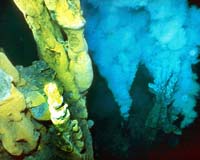
Japan (SPX) Jun 10, 2005 Vast genetic resources � "blue gold" on the international deep sea floor � need protection from unfettered commercial exploitation, warns a new report from the Japan-based United Nations University Institute for Advanced Studies (UNU-IAS). Increasingly recognized as important to humankind for their potential medical and other uses, deep sea resources are now more accessible and vulnerable than ever because of rapid advances in exploration technology, the report says. Known as "extremophiles," the genetic make-up of organisms of the deep that live in extreme conditions of pressure, temperature and toxicity is drawing enormous interest from scientists and companies bioprospecting for possible pharmaceutical or industrial applications. Already several valuable products have been created and there is growing recognition of the potential of deep sea genes to advance human welfare. The new report, Bioprospecting of Genetic Resources in the Deep Seabed , cites rising concern about the absence of clear rules governing access to and the sharing of benefits derived from the "global commons" of the sea beds and about the potential for severe, perhaps permanent damage to these unique and sensitive ecosystems, which include seamounts, cold seeps and hydrothermal vents � the latter considered nurseries for life on Earth. "Deep sea ecosystems hold the promise of huge potential contributions to future human well-being, provide our planet with vital climate-related and other ecological services, and have much to teach us about life processes," says UNU-IAS Director A.H. Zakri. "The unfettered and unregulated exploitation of international sea beds and the organisms living there could have serious long-term consequences for humankind," he says. "And for the private sector, uncertainty caused by the absence of clear, globally-agreed rules deters important research and investment decisions." "The legal and policy framework is not even close to keeping pace with the fast-evolving science and technology of deep seabed bioprospecting," says report contributor Sam Johnston, Senior Research Fellow at UNU-IAS. "The international debate still sees governments divided over whether or how to regulate deep seabed bioprospecting. This division stems from limited knowledge about the environmental impacts and economic potential of deep seabed bioprospecting, combined with a strong sensitivity to countries' freedoms in international areas." "Ethical concerns have been raised with regard to the status of deep seabed genetic resources," says Salvatore Arico of UNESCO, a Visiting Research Fellow at UNU-IAS and a lead author of the report with Charlotte Salpin. "These resources lie within the global commons, but are they free for anyone to take or are they the heritage and property of all humankind?"
Growing threats to fragile ecosystems Deep sea expeditions are increasingly frequent, their focus shifting from geological and geophysical study to ecological, biological, physiological and bioprospecting, the report says. While most research is still purely scientific, the report predicts that the promise of important new products will lead to an increase in commercial exploration. The report cites the need to prevent harm from research in deep seabed areas, especially those particularly sensitive to disturbances such as cold seeps and seamounts. "While it is impossible to quantify the damage caused by such research on the deep seabed environment, threats include destruction of habitats, unsustainable collection, alteration of local hydrological and environmental conditions, and pollution of various nature. "The same activities can have very different impacts in various deep sea ecosystems, and cumulative impacts over time, such as those associated with deep sea trawling, have already resulted in the extinction of species."
Growing value of products from marine biotechnology The world's oceans host 32 of the 34 known phyla on Earth, the report says. Species diversity is known to be as high as 1,000 per square meter in the Indo-Pacific Ocean. Significantly, the ratio of potentially useful natural compounds is higher in marine than terrestrial organisms. There is, therefore, a higher probability of commercial success with marine-sourced material. The odds of success are long, however; just one to two percent of pre-clinical candidates become commercial products. Nevertheless, the report says all major pharmaceutical firms, including Merck, Lilly, Pfizer, Hoffman-Laroche and Bristol-Myers Squibb, have marine biology departments, and cites the following estimates:
Other compounds have anti-inflammatory properties and one is used as an anti-irritant in cosmetics.
A hormone extracted from salmon has been found effective in preventing osteoporosis while a salmon-derived sulfate is an antidote to the anticoagulant heparin.
Sponges are particularly targeted as potential sources of pharmaceutical products. One of the most effective treatments for leukemia is based on derivatives of a sponge while a sponge-derived steroid compound completed phase one US trials as an asthma drug in 2000. Other research in progress includes treatments for breast and ovarian cancer.
Impediments to this research include not just the high expedition costs but the absence of clear rules governing resource access benefits sharing. Some companies say uncertainty over access procedures is a major deterrent to their research and investment, according to the report.
Seabed is not a lawless realm, but almost
Bioprospecting in the seabed within territorial limits is currently regulated by the UN Convention on the Law of the Sea (UNCLOS), which determines states' jurisdiction, rights and obligations in the oceans, as well as in the Convention on Biological Diversity, which governs access to genetic resources and benefit-sharing.
While most countries have regulations on marine scientific research in their waters and seabed, only a few have legislation regulating access to and exploitation of their marine and other genetic resources.
Many of the world's unique seabed ecosystems lie in international waters beyond national jurisdiction with no international rules. And no state has yet adopted measures addressing bioprospecting undertaken by its nationals in international waters.
The UNU-IAS report identifies shortcomings in UNCLOS, the Convention on Biological Diversity and intellectual property rights instruments governing access and benefit-sharing to genetic resources. These include the need to:
The report says regional agreements could be used as a first step towards a comprehensive international regime to protect the deep seabed from over-exploitation.
It also suggests the UN General Assembly adopt guidelines on deep seabed bioprospecting to be used until a binding regime is developed. The guidelines could facilitate cooperation and coordination between states and, drawing on existing global and regional instruments, include measures on conservation, sustainable use and the sharing of benefits.
Email This Article Comment On This Article Related Links United Nations University a SpaceDaily Search SpaceDaily Subscribe To SpaceDaily Express Water News - Science, Technology and Politics
 China To Improve Water Supply
 Beijing (XNA) Dec 18, 2005
Chinese Vice Premier Hui Liangyu said Saturday China will speed up construction of water supply projects, while giving priority to water conservancy for sustainable use of water resources in the coming year. |
|
|

| The content herein, unless otherwise known to be public domain, are Copyright 1995-2006 - SpaceDaily.AFP and UPI Wire Stories are copyright Agence France-Presse and United Press International. ESA PortalReports are copyright European Space Agency. All NASA sourced material is public domain. Additionalcopyrights may apply in whole or part to other bona fide parties. Advertising does not imply endorsement,agreement or approval of any opinions, statements or information provided by SpaceDaily on any Web page published or hosted by SpaceDaily. Privacy Statement |