|
 |
 |
 |
 |
 |
 |
 |
 |

 |
Clear Hard Nano Based Coatings
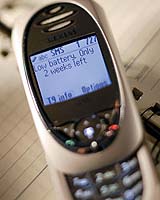
New York (UPI) Dec 13, 2005 A transparent coating loaded with particles only nanometers or billionths of a meter in diameter is far harder than other conventional organic coatings on the market, for potential use in everything from iPods and cell phones to car windows and flexible video displays, experts told UPI's Nano World. Akron, Ohio-based Ecology Coatings has developed a new coating for polycarbonate plastics. Polycarbonate is extremely tough and naturally transparent and is one of the most widely used engineered materials in the world, finding its way into lightweight eyeglass lenses, safer cars, shatterproof windows, computer parts and hundreds of other products. "The hope is to replace glass with something lighter and more breakage-resistant," said Ecology Coatings Chief Chemist Sally Ramsey. While polycarbonate is very breakage-resistant, it is easily scratched, Ramsey explained. Polycarbonate is often given coatings to improve its scratch resistance, but these are not always very strong and can compromise the material's transparency, adversely affecting other aspects of a device's performance. For instance, scratched iPod and cell-phone screens can drain energy as users try to brighten them up in order to read them properly. In analyses of the new coating, New Berlin, Wis.-based coatings specialist company Tekra found it rated three to four levels harder than any conventional organic coating on the market today according to the Japanese Industry Standard, a rigorous test for coating hardness. This means it is "at least 50 percent harder," Ramsey said. "Ecology Coatings has developed a technology for polycarbonates that throws the door open wide on a whole new set of performance properties that benefit manufacturers and consumers," said Tekra Research and Development Manager Jason Wichmann. The key to the coating's strength and transparency are oxide nanoparticles roughly 50 nanometers wide. These hard particles help prevent abrasive edges and surfaces from penetrating and scratching the coating. At the same time, the nanoparticles are small enough to allow light to pass through undisturbed. "We are finding that in order to stay at the cutting edge of the new industrials, companies need to start looking at nanomaterials or risk quickly becoming dinosaurs," Wichmann said. Developing a technique in which a coating will stick onto a surface without inadvertently clouding it up was "the biggest challenge," Ramsey said. The solution they came up with uses ultraviolet light to quickly cure the coating applied to the polycarbonate without etching the surface. This process contains no toxic solvents, water or other liquids. In addition to incorporating oxide nanoparticles into coatings, "we are also exploring the incorporation of other substances to deliver specialized properties. These basic clear coats are exciting, but they are just the beginning," Ramsey said.
Source: United Press International Community Email This Article Comment On This Article Related Links Ecology Coatings SpaceDaily Search SpaceDaily Subscribe To SpaceDaily Express Carbon Worlds - where graphite, diamond, amorphous, fullerenes meet
 Nano Interfaces With Cells
 New York (UPI) Jan 04, 2006
Coatings made with titanium and peppered with pores only nanometers or billionths of a meter wide could help interface living cells with electronics for prosthetics and other advanced devices, experts told UPI's Nano World. |
|
|

| The content herein, unless otherwise known to be public domain, are Copyright 1995-2006 - SpaceDaily.AFP and UPI Wire Stories are copyright Agence France-Presse and United Press International. ESA PortalReports are copyright European Space Agency. All NASA sourced material is public domain. Additionalcopyrights may apply in whole or part to other bona fide parties. Advertising does not imply endorsement,agreement or approval of any opinions, statements or information provided by SpaceDaily on any Web page published or hosted by SpaceDaily. Privacy Statement |