|
 |
 |
 |
 |
 |
 |
 |
 |

 |
Claim: U.S. Created al-Zarqawi Myth
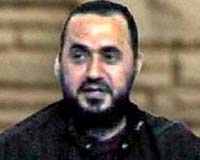
Washington (UPI) Nov 10, 2005 The United States created the myth around Iraq insurgency leader Abu Musab al-Zarqawi and reality followed, terrorism expert Loretta Napoleoni said. Al-Zarqawi was born Ahmad Fadil al-Khalayleh in October 1966 in the crime and poverty-ridden Jordanian city of Zarqa. But his myth was born Feb. 5, 2003, when then-Secretary of State Colin Powell presented to the United Nations the case for war with Iraq. Napoleoni, the author of "Insurgent Iraq," told reporters last week that Powell's argument falsely exploited Zarqawi to prove a link between then-Iraqi President Saddam Hussein and al-Qaida. She said that through fabrications of Zarqawi's status, influence and connections "the myth became the reality" -- a self-fulfilling prophecy. "He became what we wanted him to be. We put him there, not the jihadists," Napoleoni said. Iraq's most notorious insurgent, Napoleoni argues, accomplished what bin Laden could not: "spread the message of jihad into Iraq." In an article of Napoleoni's in the current November/December issue of Foreign Policy, she said, "In a sense, it is the very things that make Zarqawi seem most ordinary -- his humble upbringing, misspent youth and early failures -- that make him most frightening. Because, although he may have some gifts as a leader of men, it is also likely that there are many more 'al-Zarqawis' capable of filling his place." The myth of al-Zarqawi, Napoleoni believes, helped usher in al-Qaida's "transformation from a small elitist vanguard to a mass movement." Al-Zarqawi became "the icon" of a new generation of anti-imperialist jihadists, she said. The grand claim that al-Zarqawi provided the vital link between Saddam and al-Qaida lost its significance after it became known that al-Zarqawi and bin Laden did not forge a partnership until after the war's start. The two are believed to have met sometime in 2000, but al-Zarqawi -- similar to a group of dissenting al-Qaida members --rebuffed bin Laden's anti-American brand of jihad. "He did not have a global vision like Osama," said Napoleoni, who interviewed primary and secondary sources close to al-Zarqawi and his network. A former member of al-Zarqawi's camp in Herat told her, "I never heard him praise anyone apart from the Prophet [Muhammad]; this was Abu Musab's character. He never followed anyone." Al-Zarqawi's scope before the Iraq war, she continued, did not extend past corrupt Arab regimes, particularly Jordan's. Between 2000 and early 2002, he operated the training camp in Herat with Taliban funds; the fighters bound for Jordan. After the fall of the Taliban, he fled to Iraqi Kurdistan and set up shop. In 2001, Kurdish officials enlightened the United States about the uninvited Jordanian, said Napoleoni. Jordanian officials, who had still unsolved terrorist attacks, were eager to implicate al-Zarqawi, she claimed. The little-known militant instantly had fingerprints on most major terrorist attacks after Sept. 11, 2001. He was depicted in Powell's speech as a key player in the al-Qaida network. By perpetuating a "terrifying myth" of al-Zarqawi, the author said, "The United States, Kurds, and Jordanians all won ... but jihad gained momentum," after in-group dissension and U.S. coalition operations had left the core of al-Qaida crippled. In her article, Napoleoni says, "[Zarqawi] had finally managed to grasp bin Laden's definition of the faraway enemy, the United States." Adding that, "Its presence in Iraq as an occupying power made it clear to him that the United States was as important a target as any of the Arab regimes he had grown to hate. "... The myth constructed around him is at the root of his transformation into a political leader. With bin Laden trapped somewhere in Afghanistan and Pakistan, al-Zarqawi fast became the new symbolic leader in the fight against America and a manager for whoever was looking to be part of that struggle," she wrote. The author points to letters between al-Zarqawi and bin Laden that have surfaced over the past two years, indicating the evolution in their relationship, most notably a shift in al-Zarqawi which led to his seeking additional legitimacy among Sunnis that bin Laden could help bestow. In late December 2004 -- shortly after the fall of Fallujah -- the pan-Arab network Al-Jazeera aired a video of what was bin Laden's first public embrace of Zarqawi and his fight in Iraq. "... We in al-Qaida welcome your union with us ... and so that it be known, the brother mujahid Abu Musab al-Zarqawi is the emir of the al Qaida organization [in Iraq]," bin Laden declared. Napoleoni believes that al-Zarqawi, however, is still largely driven by the romantic vision of a restored Caliphate, and that his motives still are less political than some other factions participating in the Iraq resistance. She questions whether he has actually devised a plan for "what he will do, if and when, he wins." All rights reserved. Copyright 2004 by United Press International. Sections of the information displayed on this page (dispatches, photographs, logos) are protected by intellectual property rights owned by United Press International. As a consequence, you may not copy, reproduce, modify, transmit, publish, display or in any way commercially exploit any of the content of this section without the prior written consent of by United Press International. Community Email This Article Comment On This Article Related Links SpaceDaily Search SpaceDaily Subscribe To SpaceDaily Express The Long War - Doctrine and Application
 NGC Team Receives Third Phase Contract For Portable Bio-Warfare Detection Program
 Baltimore MD (SPX) Jan 10, 2006
A Northrop Grumman-led team has been selected by the Defense Advanced Research Projects Agency (DARPA) to continue development of the handheld isothermal silver standard sensor (HISSS), a portable system used for identifying biological-warfare agents, including bacteria, viruses and toxins. |
|
|

| The content herein, unless otherwise known to be public domain, are Copyright 1995-2006 - SpaceDaily.AFP and UPI Wire Stories are copyright Agence France-Presse and United Press International. ESA PortalReports are copyright European Space Agency. All NASA sourced material is public domain. Additionalcopyrights may apply in whole or part to other bona fide parties. Advertising does not imply endorsement,agreement or approval of any opinions, statements or information provided by SpaceDaily on any Web page published or hosted by SpaceDaily. Privacy Statement |