|
 |
 |
 |
 |
 |
 |
 |
 |

 |
Civilian Sector Biggest Space Customer
San Antonio TX (SPX) Feb 20, 2006 The head of Air Force Space Command said people might be surprised to learn that corporate America is the biggest user of Air Force space products. Gen. Lance W. Lord said the main reason for this is the reliability of space-based assets and because the technologies -- which are giving coalition forces an edge on the global war on terrorism -- can be adapted for use in a variety of civilian applications. The relationship is lucrative for the civilian sector. The global economic impact of space is an estimated $209 billion, the general said. Its use in space transportation, satellite communications, global positioning systems, or GPS, and remote sensing contributed $91 billion to the global economy in 2003 and involved half a million jobs in the United States alone. Plus, command space acquisitions and operations contribute $11 billion annually to the U.S. economy. "Removing space capabilities from our way of life would not only cripple our combat forces, but it would have catastrophic consequences on our entire economy," General Lord said. As an example, the general said, "Every time you take money out of the ATM or pay with a credit at the gas station, you're using GPS." The navigation system available on some new cars also uses GPS technology. Americans have come to depend on the commercial applications of space products and experience hardships when a system goes down. General Lord cited one example in 1998, when a commercial satellite lost its Earth orientation. The glitch wiped out "40 million pagers in the United States, halting credit card transactions and ATM machines," he said. It also knocked television and radio stations off the air. To help maintain a viable space system, General Lord commands the nearly 40,000 space professionals. They run a global network of satellite command and control, communications, missile warning and launch facilities and maintain the combat readiness of the nation's intercontinental ballistic missile force. One important job space operators do is track all man-made objects in space. This provides information that helps object deconfliction to allow commercial space launches. In addition, space assets are helping provide more accurate weather forecasts. That was the case when Hurricane Katrina hit the Gulf Coast. "The devastation we saw as a result of Hurricane Katrina would have been the tip of the iceberg if not for the early warning provided from space," the general said. And GPS technology -- the same as the military uses -- is more important than ever to the civilian first-response community, he said. It is helping worldwide civilian search and rescue operations become more efficient by pinpointing the exact location of people in need. "It's estimated that 18,000 people worldwide were saved with the help of satellite-aided search and rescue -- with 5,000 of those in the United States," he said. The use of space technologies will only continue to increase in the future. There will also be an increased need to continue coming up with technological advances, the general said. This will help cut the price of doing business in all sectors. "America needs space for its national security -- and the survival of our way of life," General Lord said. Community Email This Article Comment On This Article Related Links Air Force Space Command The latest information about the Commercial Satellite Industry
 GEO Market Worth 28 Billion Dollars Over Next Decade
 Fairfax, VA (SPX) Feb 10, 2006
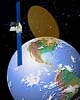
Teal Group has reported at the Satellite 2006 conference and exposition the completion of a new 10-year market forecast for geostationary orbit commercial satellites. The study projects a total of 176 GEO commercial satellites, worth $28.3 billion, will be built and launched during 2006-2015. |
|
|

| The content herein, unless otherwise known to be public domain, are Copyright 1995-2006 - SpaceDaily.AFP and UPI Wire Stories are copyright Agence France-Presse and United Press International. ESA PortalReports are copyright European Space Agency. All NASA sourced material is public domain. Additionalcopyrights may apply in whole or part to other bona fide parties. Advertising does not imply endorsement,agreement or approval of any opinions, statements or information provided by SpaceDaily on any Web page published or hosted by SpaceDaily. Privacy Statement |