|
 |
 |
 |
 |
 |
 |
 |
 |

 |
City Ants Take The Heat
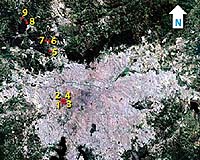
Los Angeles CA (SPX) Feb 28, 2007 While Al Gore's film, An Inconvenient Truth, has generated greater awareness of global warming, most people remain unaware of the more rapid warming that has occurred within major cities. In fact, large cities can be more than 10 degrees hotter than their surroundings. These metropolitan hot spots, which scientists refer to as urban heat islands, can stress the animals and plants that make their home alongside humans. Until recently, biologists had focused so much on the effects of global climate change, that they had overlooked the effects of urban warming. Now, an international team of biologists, led by Michael Angilletta of Indiana State University, has shown that city animals have been affected by urban heat islands. These researchers discovered that ants within South America's largest city-Sao Paulo, Brazil-could tolerate heat better than ants from outside this city. Their findings, to be published in the online journal PLoS ONE, suggest that ants have adjusted their physiology in response to urban warming. "We don't know whether this pattern will hold up for other species or other cities, but people should certainly be looking," said Angilletta, an Associate Professor of Ecology and Organismal Biology. "Ultimately, this research could help us to understand how species will respond to global climate change." Working closely with geographers from Indiana State University's Center for Urban and Environmental Change, these biologists will soon determine whether urban warming has affected species in other major cities. "We will quantify heat islands on the small scales that pertain to organisms, initially in Indianapolis and later in other major cities throughout the world," said Weng, an Associate Professor of Geography and Director of Indiana State's Center for Urban and Environmental Change. "We will construct thermal maps using satellite images recorded over several years. These maps will enable us to assess the potential biological consequences of urban warming and identify suitable sites for future experiments," Weng said. This study will be published on February 28, 2007 in PLoS ONE, the international, peer-reviewed, open-access, online publication from the Public Library of Science (PLoS). Angilletta MJ, Wilson RS, Niehaus AC, Sears MW, Navas CA, et al (2007) Urban Physiology: City Ants Possess High Heat Tolerance. PLoS ONE 2(2): e258. doi:10.1371/journal.pone.0000258 Community Email This Article Comment On This Article Related Links Paper on Line Public Library of Science Darwin Today At TerraDaily.com Darwin Today At TerraDaily.com
 Lost Cuckoo Breaks Its Silence
 Bronx, NY (SPX) Feb 28, 2007
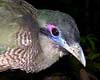
A team of biologists with the New York-based Wildlife Conservation Society (WCS) have recorded for the first time the call of the extremely rare Sumatran ground cuckoo, found only on the island of Sumatra in Indonesia. The bird was captured by a trapper and handed over to WCS biologists, who recorded the bird's call while it nursed an injured foot. Once fully recovered, the bird will be released back into the wild. |
|
|

| The content herein, unless otherwise known to be public domain, are Copyright 1995-2006 - SpaceDaily.AFP and UPI Wire Stories are copyright Agence France-Presse and United Press International. ESA PortalReports are copyright European Space Agency. All NASA sourced material is public domain. Additionalcopyrights may apply in whole or part to other bona fide parties. Advertising does not imply endorsement,agreement or approval of any opinions, statements or information provided by SpaceDaily on any Web page published or hosted by SpaceDaily. Privacy Statement |