|
 |
 |
 |
 |
 |
 |
 |
 |

 |
Chinese Weaponry In The Early 21st Century Part Four
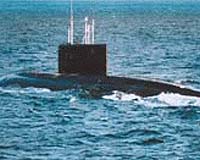
Washington (UPI) Feb 11, 2008 The continuing weakness of China's armaments industry has profound implications for China's diplomacy, grand strategy and choice of conflicts it would be prepared to undertake for many years to come. First, this weakness puts Russia in the driver's seat of the Russian-Chinese alliance. Although never formalized as such, this alliance has been a reality ever since both nations formed the Shanghai Cooperation Organization on June 15, 2001, with the residents of four former Soviet republics in Central Asia. China therefore looks certain to remain dependent upon Russia for years, possibly decades to come, for two crucial staples of great power status: enough oil and gas to keep its rapidly growing industries operating; and the modern, rugged, state-of-the-art weapons, especially for ground forces and for the rapid overseas projection of military power, that China still cannot produce. If the European Union finally loosens its sanctions on China, European high-tech weapons manufacturers may expect a floodtide of orders. China may order some German Dolphin submarines of the kind Israel operates to make itself less dependent on Russian-built Kilo subs. It may wish to buy French Scorpion submarines as well, but France may not want to endanger the growing demand for such submarines in India by selling to China, too. Companies like Britain's BAE Systems may be on the receiving end of major Chinese orders too, but BAE in particular is so dependent upon the U.S. government and armed forces for its sales that it may well be reluctant to make such a deal for fear of alienating Washington. China remains especially dependent on Russian goodwill to buy Main Battle Tanks, multiple launch rocket systems and robust armored personnel carriers. If Russia continues in its refusal to sell such advanced systems to China, and if Sino-American relations do not dramatically and unexpectedly warm up in the near future, then China will remain weak in the deployment of large land forces against its immediate neighbors. This vulnerability will force China to seek continued good relations with Russia and defuse tensions with India and, indeed, these are exactly the developments we have seen over the past few years. By contrast, China remains confident and aggressive in pushing its interests and expanding its naval and air presence in the South China Sea, in Southeast Asia and in the Indian Ocean. It is also moving energetically to secure its claim to the oil-rich region of the Spratly Islands, despite the strong opposition of Japan and Vietnam in particular. Of course, this is in large part dictated by China's need to protect its long and vulnerable oil supply lines from the Middle East. But it is also a reflection of the current and probable procurement strengths and weaknesses of the Chinese armed forces. China has an excellent air force with a large number of relatively low-tech but still formidable Sukhoi and Sukhoi-type interceptors and fighter-bombers, and it has expanded its navy with its own submarines, Russian-built Kilo diesel subs and four Russian-built Sovremenny destroyers with powerful anti-ship ballistic missile firepower. Therefore, while the continuing structural weakness of the Chinese arms industry has shaped Beijing's broader strategy, it has not prevented the Chinese government from focusing on its armed forces' existing and growing strengths in shaping it. Ironically, this appears to have been Russia's aim, too. Russian policy has not been to ignore or impose China's rise to superpower status on the Eurasian landmass, but to constructively engage China and try to direct Chinese expansion into directions that do not threaten Russia and that are compatible with Russia's own strategic goals. The continuing strength of the Russian armaments industry and China's continued need for the output of the Russian military-industrial complex have played a key role in allowing the Kremlin to successful prosecute this policy.
Email This Article Comment On This Article Related Links The latest in Military Technology for the 21st century at SpaceWar.com
 DRS Tech Gets Contract To Supply Marine Corps With Rugged Tablet Computers
 Parsippany NJ (SPX) Jul 10, 2007
DRS Technologies has received a $5 million award as part of a previous contract to provide military rugged tablet (MRT) computers and peripheral equipment for the U.S. Marine Corps' Target Location Designation Handoff System (TLDHS) program. DRS received the order from Stauder Technologies in St. Peters, Missouri. For this contract the company's DRS Tactical Systems business unit in Melbourne, Florida, will produce hundreds of the handheld MRT computers and peripheral equipment. |
|
|

| The content herein, unless otherwise known to be public domain, are Copyright 1995-2007 - SpaceDaily.AFP and UPI Wire Stories are copyright Agence France-Presse and United Press International. ESA Portal Reports are copyright European Space Agency. All NASA sourced material is public domain. Additional copyrights may apply in whole or part to other bona fide parties. Advertising does not imply endorsement,agreement or approval of any opinions, statements or information provided by SpaceDaily on any Web page published or hosted by SpaceDaily. Privacy Statement |