|
 |
 |
 |
 |
 |
 |
 |
 |

 |
China's First "Space Silkworm" Experiment Successful
Beijing (SPX) Sep 20, 2005 The silkworms onboard China's 22nd recoverable satellite completed their 18-day space trip and returned to the Beijing Aerospace City successfully Sept 18, 2005. The "space silkworms" entered the space onboard China's 22nd recoverable satellite August 29, 2005. Six students from the Beijing Jingshan Middle School who participated in the experiment witnessed the unforgettable moment when the "silkworms" blast off with the satellite. In 1999 NASA started to solicit space experimental plan among students around the world. Li Taotao, a student at grade four in Beijing Jingshan Primary School submitted a plan named "silkworm's spinning and cocooning in space", which aimed to study "silkworms' lifespan in the space". Li's plan was finally selected by NASA as part of the space biotechnology program. The experiment, planned to be conducted onboard Columbia in January 2003, was suspended due to the space shuttle Columbia's accident. The experiment caught attention from Chinese scientific departments and all walks of society. Many noted scientists participated and gave their instructions. China Aerospace Science & Technology Corporation (CASC) finally decided to carry out the experiment onboard China's 22nd recoverable satellite. The success of the "space silkworm" experiment shows advanced design of the satellite and reliability of the platform. It is capable to host more experiments in the future, said Tang Bochang, chief designer of the recoverable satellite. Source: Xinhua News Agency Community Email This Article Comment On This Article Related Links SpaceDaily Search SpaceDaily Subscribe To SpaceDaily Express The Chinese Space Program - News, Policy and Technology China News from SinoDaily.com
 Taikonauts On Moon A Far Off Dream For China Yet
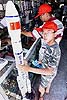 Beijing (XNA) Jan 05, 2006
A one-year lunar fly-by mission may start in April 2007 in China, but a manned flight to the Earth's neighbour may be a long way away, a chief lunar exploration scientist said last night. |
|
|

| The content herein, unless otherwise known to be public domain, are Copyright 1995-2006 - SpaceDaily.AFP and UPI Wire Stories are copyright Agence France-Presse and United Press International. ESA PortalReports are copyright European Space Agency. All NASA sourced material is public domain. Additionalcopyrights may apply in whole or part to other bona fide parties. Advertising does not imply endorsement,agreement or approval of any opinions, statements or information provided by SpaceDaily on any Web page published or hosted by SpaceDaily. Privacy Statement |