|
 |
 |
 |
 |
 |
 |
 |
 |

 |
China To Use Galileo Satellite Navigation System
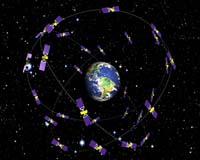
Nanjing, China (XNA) Dec 08, 2006 The European Union's Galileo satellite navigation system, a rival to the reigning global positioning system (GPS) of the United States, is expected to be operational in China in 2008. The 30-satellite system, with a navigational fix accurate to within one meter, will provide safe, reliable and accurate navigational information for Chinese users in fields of civil aviation, railway, waterway and road transportation, according to a Sino-EU technology cooperation symposium in Nanjing, capital of east China's Jiangsu Province. China officially joined the project in 2004 and invested 200 million euros in a Galileo training and application research center based in Southeast University in Nanjing. The center carries out research on the satellite receiver, chips and communication system and provides scientific training for the Galileo project, said Li Jianqing, head of the technology department of the university. The European Union (EU) and the European Space Agency kicked off the 3.5 billion-euro Galileo Project in March 2002 to develop a satellite-navigation system independent of the U.S. GPS monopoly. Unlike the military-managed GPS, Galileo will stay under civilian control, increasing the EU's strategic independence. Israel, India and South Korea have also joined the Galileo project. Community Email This Article Comment On This Article Related Links EU Galileo satellite navigation system The latest information about the Commercial Satellite Industry GPS Applications, Technology and Suppliers GPS Applications, Technology and Suppliers
 Russia In Talks With Other Countries On Joint Glonass Use
 Moscow, Russia (RIA Novosti) Dec 06, 2006
Russia is negotiating with other countries on the possible joint use of Russia's global positioning satellite system Glonass, the head of the Russian Space Agency said Tuesday. Glonass, a Russian version of the U.S. Global Positioning System (GPS), is designed for both military and civilian purposes, and allows users to identify their positions in real time. It can also be used in geological prospecting. |
|
|

| The content herein, unless otherwise known to be public domain, are Copyright 1995-2006 - SpaceDaily.AFP and UPI Wire Stories are copyright Agence France-Presse and United Press International. ESA PortalReports are copyright European Space Agency. All NASA sourced material is public domain. Additionalcopyrights may apply in whole or part to other bona fide parties. Advertising does not imply endorsement,agreement or approval of any opinions, statements or information provided by SpaceDaily on any Web page published or hosted by SpaceDaily. Privacy Statement |