|
 |
 |
 |
 |
 |
 |
 |
 |

 |
China To Launch New Series Of Oceanic Survey Satellites
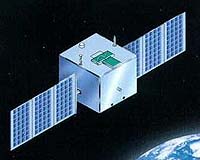
Beijing, China (XNA) Feb 02, 2007 China's State Council has endorsed plans to launch the second-generation of the country's oceanic survey satellites, the state's top ocean research official said on Thursday. The "Haiyang-2" (Ocean 2) series of satellites, a crucial component of China's civil spacecraft program, would be used to collect data on offshore wind fields, ocean circulation, tides, and sea surface temperatures, said Sun Zhihui, director of State Oceanic Administration. China launched its first oceanic satellite "Haiyang-1A" (Ocean 1A) in 2002, to monitor ocean color and temperature through remote sensing technology. The monitoring range of the "Haiyang-1A" covered the Bohai Sea, the Yellow Sea, the East China Sea and the South China Sea. Sun told a national conference on oceanic administration that the country's second oceanic satellite -- the "Haiyang-1B" (Ocean 1B) the successor of the "Haiyang-1A" -- would be launched "very soon", but he did not reveal the specific timetable. Source: Xinhua News Agency Community Email This Article Comment On This Article Related Links Making money out of watching earth from space today Water, Water Everywhere and Not A Drop To Drink... The Chinese Space Program - News, Policy and Technology China News from SinoDaily.com
 China Holds Firm On Space Test As US Reviews Options
 Beijing (AFP) Feb 1, 2007
China insisted Thursday it did not want an arms race in space but refrained from commenting on Japanese Prime Minister Shinzo Abe's claims that its satellite-destroying test had broken international law. China's foreign ministry refused to react directly to Abe's comments that Beijing had violated an international space treaty when it shot down one of its own satellites with a missile on January 11. |
|
|

| The content herein, unless otherwise known to be public domain, are Copyright 1995-2006 - SpaceDaily.AFP and UPI Wire Stories are copyright Agence France-Presse and United Press International. ESA PortalReports are copyright European Space Agency. All NASA sourced material is public domain. Additionalcopyrights may apply in whole or part to other bona fide parties. Advertising does not imply endorsement,agreement or approval of any opinions, statements or information provided by SpaceDaily on any Web page published or hosted by SpaceDaily. Privacy Statement |