|
 |
 |
 |
 |
 |
 |
 |
 |

 |
China To Build New Space Launch Center In Southernmost Province
Beijing (XNA) Sep 24, 2007 China plans to construct a new space launch center in Wenchang, China's southernmost Hainan Province, according to official sources. The new launch center aims to serve the next-generation rocket carriers that do emit poisonous and pollutive gas and new-type spacecraft. The new launch site will be mainly used for launching synchronous satellites, heavy satellites, large space stations, and deep space probe satellites, according to the plan which has been approved by the State Council and the Central Military Commission. Hainan is located in a low-latitude region, which is helpful to increasing the capacity of rocket carriers and extending the lifespan of satellites. A spokesman for China's space program said the Chinese government works on peaceful use of the outer space to promote development of human civilization and social development and benefit the whole Mankind. In 1958, China began building its first rocket launch site in northwest China's Jiuquan. At present, the country has three space launch grounds. The other two are located in Taiyuan, capital of north China's Shanxi Province and Xichang in southwestern Sichuan Province. These launch sites have carried out over 100 space launches, sending over 100 satellites and six manned spacecraft into space.
Source: Xinhua News Agency Community Email This Article Comment On This Article Related Links The Chinese Space Program - News, Policy and Technology China News from SinoDaily.com
 China Launches Third Sino-Brazilian Earth Resources Satellite
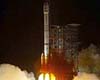 Taiyuan, China (XNA) Sep 19, 2007
China launched the third earth resources satellite co-developed with Brazil on Wednesday morning and the two nations will jointly develop two more satellites. The satellite, named 02B, was launched on a Chinese Long March-4B carrier rocket which blasted off at 11:26 a.m. (Beijing Time) from the Taiyuan Satellite Launch Center in north China's Shanxi Province. The satellite separated from the rocket 12 minutes after lift-off, entering its preset sun-synchronous orbit, at a perigee of 738 kilometers and an apogee of 750 kilometers. |
|
|

| The content herein, unless otherwise known to be public domain, are Copyright 1995-2007 - SpaceDaily.AFP and UPI Wire Stories are copyright Agence France-Presse and United Press International. ESA Portal Reports are copyright European Space Agency. All NASA sourced material is public domain. Additional copyrights may apply in whole or part to other bona fide parties. Advertising does not imply endorsement,agreement or approval of any opinions, statements or information provided by SpaceDaily on any Web page published or hosted by SpaceDaily. Privacy Statement |