|
 |
 |
 |
 |
 |
 |
 |
 |

 |
China Outlines 4 Scientific Goals For Moon Project
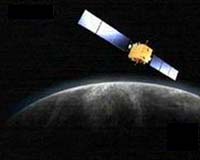
Beijing - Nov 10, 2003 Chang'e I, China's moon probing project is proceeding in full swing in a well-organized way. China's first moon probing is planned to be launched in three years. Four scientific goals have been set for the first stage of the program, Chang'e I moon orbiting project. This was disclosed recently by Ou'yang Ziyuan, academician of Chinese Academy of Sciences and China's chief scientist on moon probing. He also detailed the project as follows. Verifications have been conducted on China's moon probing program for years. There were additional verifications on the technical scheme in recent two years. Now everything is going on as scheduled. The first stage of the program, Chang'e I as it is called, will mostly adopt existing mature technologies and there is nothing insurmountable or fundamental problems technically. However, it takes time to develop all equipment to be installed inside the satellite and to establish systems for orbiting, carrying, monitoring, and ground receiving, as the project aims at the lift-off of a moon probing satellite and making it orbit the moon. It is scheduled that three years is needed before the maiden visit to the moon can be made. According to the short-term planning, there are three stages for China's moon probing, that is, orbiting, docking, and returning. In the first stage, orbiting, China's first moon exploration satellite will be developed and launched which will conduct a comprehensive, overall, and panoramic observation to capture three-dimensioned graphs of the moon. Researches for the second stage, docking, include the launch of a docking vehicle for lunar soft landing, soft landing test, inspection around the lunar surface by a lunar rover, on-spot explorations, and moon-based astronomical observations. For the third stage, returning, in addition to a docking vehicle, a small-sized sampling capsule will be launched which will collect key samples from the moon and return to the earth. "Orbiting" is presently central to China?�s moon probing program. There are four scientific goals for this stage of "orbiting".
Source: Xinhua Community Email This Article Comment On This Article Related Links SpaceDaily Search SpaceDaily Subscribe To SpaceDaily Express The Chinese Space Program - News, Policy and Technology China News from SinoDaily.com
 Taikonauts On Moon A Far Off Dream For China Yet
 Beijing (XNA) Jan 05, 2006
A one-year lunar fly-by mission may start in April 2007 in China, but a manned flight to the Earth's neighbour may be a long way away, a chief lunar exploration scientist said last night. |
|
|

| The content herein, unless otherwise known to be public domain, are Copyright 1995-2006 - SpaceDaily.AFP and UPI Wire Stories are copyright Agence France-Presse and United Press International. ESA PortalReports are copyright European Space Agency. All NASA sourced material is public domain. Additionalcopyrights may apply in whole or part to other bona fide parties. Advertising does not imply endorsement,agreement or approval of any opinions, statements or information provided by SpaceDaily on any Web page published or hosted by SpaceDaily. Privacy Statement |