|
 |
 |
 |
 |
 |
 |
 |
 |

 |
China Launches Satellite For Super Fruit And Vegetables
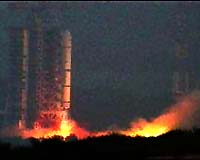
Beijing (AFP) Sep 09, 2006 China on Saturday launched a satellite carrying fruit and vegetable as part of a plan to help develop space-enhanced produce to feed the country's 1.3 billion people, state press reported. The Shijian-8, a recoverable satellite, was launched aboard a Long March 2C rocket for a mission that will expose 2,000 seeds from nine different categories to cosmic radiation and micro-gravity, Xinhua news agency reported. The satellite had successfully entered orbit and would be conducting a range of space experiments, it said. The data gathered aboard the "seed satellite" will enable scientists to try to cultivate high-yield and high-quality plants, state media quoted the China National Space Administration as saying earlier. China has been experimenting with space-bred seeds for many years, with rice and wheat exposed to space later offering increased yields. The satellite, the first dedicated specifically to seeds, was the 23rd recoverable satellite launched by China, Xinhua said. China's space seed experiments come as the nation seeks ways to feed its population amid a rapid decline in farming land due to swift industrialization.
Source: Agence France-Presse Community Email This Article Comment On This Article Related Links Read More About the Chinese Space Program The Chinese Space Program - News, Policy and Technology China News from SinoDaily.com
 China Seeks Closer Int'l Co-Op In Space Industry
 Beijing, China (XNA) Aug 30, 2006
China will strengthen cooperation with the international community in the space industry, aiming for the peaceful development of space, a senior Chinese official said here Monday. |
|
|

| The content herein, unless otherwise known to be public domain, are Copyright 1995-2006 - SpaceDaily.AFP and UPI Wire Stories are copyright Agence France-Presse and United Press International. ESA PortalReports are copyright European Space Agency. All NASA sourced material is public domain. Additionalcopyrights may apply in whole or part to other bona fide parties. Advertising does not imply endorsement,agreement or approval of any opinions, statements or information provided by SpaceDaily on any Web page published or hosted by SpaceDaily. Privacy Statement |