|
 |
 |
 |
 |
 |
 |
 |
 |

 |
Chasin' Meteors In An Electra
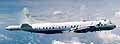
Washington - November 11, 1998 - Two research aircraft carrying new scientific observing instruments and high-definition TV cameras will seize a once-in-a-lifetime opportunity to observe the Leonids meteor shower on November 17, 1998. An L-188C Electra, owned by the National Science Foundation (NSF) and operated by the National Center for Atmospheric Research (NCAR) in Boulder, Colo. will be joined by an Air Force KC-135 in the night skies over Okinawa, Japan, during the meteor storm. "The NSF Electra is an ideal platform to participate in the Leonids meteor experiment," says Cliff Jacobs, program manager in NSF's division of atmospheric sciences, which funds NCAR. "Its ability to accommodate multiple state-of-the-art, upward-looking instruments will provide an exceptional opportunity to study these meteors." The meteor storm will occur when Earth enters the dense debris behind Temple-Tuttle on November 17, 1998, and again on November 18, 1999. Although the comet returns every 33 years, its orbit crosses Earth's only once every hundred years. This century's crossing offers scientists a close look at the trails of unusually fresh and large (millimeter- to centimeter-size) meteors entering the earth's atmosphere at the fastest possible speeds -- 72 kilometers per second (160,000 miles per hour). Best observations will be from East Asia (China and Japan). Next year, Europe and North Africa will offer the best viewing. From the ground, the source of the storm appears in the constellation Leo. The National Aeronautics and Space Administration is heading the experiment, which is the first mission in NASA's Astrobiology Program, created to study the origin and prevalence of life in the universe. The Leonid Multi-Instrument Aircraft Campaign is also supported by NSF, the U.S. Air Force, and NHK Japanese television. The two aircraft are needed to take the observing instruments into clear skies above the weather-laden lower atmosphere. The Air Force's FISTA (Flying Infrared Signatures Technology Aircraft) will circle the NSF/NCAR Electra in a racetrack pattern between 30,000 and 40,000 feet while the Electra flies back and forth (north-south) about 10,000 feet lower within the loop. At these altitudes (7 to 10 kilometers, or roughly 4 to 6 miles) both planes will be safe from the meteors above, which will burn up at 100 to 120 kilometers (60 to 75 miles) above the ground. A major scientific goal of the mission is to determine how a meteor's mass compares to its brightness. To date, scientists can only guess how much material enters the atmosphere during a meteor shower. The Electra will carry a dual-beam lidar (laser-based radar) built this year to detect iron vaporized from the meteors in the upper atmosphere. Says NCAR project manager Bruce Morley, "We know very little about iron in the atmosphere and even less about the iron contribution from meteors. Observing just one meteor accurately from the sky would make a big difference to our understanding." Leonids on the Internet
Leonids at Spacer.Com
Email This Article Comment On This Article Related Links Space
 Satellite Launch To Boost DTH In India
 Calcutta, India (SPX) Dec 28, 2005
The successful launch Thursday of India's heaviest satellite from spaceport of Kourou in French Guyana may have boosted the country's space research efforts to yet another level, but it has also lifted the spirits of at least three Direct-To-Home televisions broadcasters, one of which has been waiting for years to launch its services in India. |
|
|

|
|
|
|
|
|
|
|
|
|
|
|
| The content herein, unless otherwise known to be public domain, are Copyright 1995-2006 - SpaceDaily.AFP and UPI Wire Stories are copyright Agence France-Presse and United Press International. ESA PortalReports are copyright European Space Agency. All NASA sourced material is public domain. Additionalcopyrights may apply in whole or part to other bona fide parties. Advertising does not imply endorsement,agreement or approval of any opinions, statements or information provided by SpaceDaily on any Web page published or hosted by SpaceDaily. Privacy Statement |