
 |
 |
 |
 |
 |
 |
 |
 |
 |

 |
Celestial Clues Hint At Eclipse In Homer's Odyssey
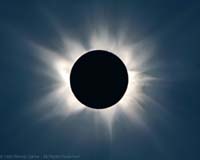
New York NY (SPX) Jun 25, 2008 Among countless other debates about Homer's Odyssey -- not the least of which is whether the entire poem can be attributed to Homer himself -- is whether Odysseus returns home to experience a total solar eclipse. But a Rockefeller University scientist and a colleague from Argentina believe they have found astronomical references in the Odyssey that provide corroborating evidence of this celestial event. The finding is reported in this week's online early edition of Proceedings of the National Academy of Sciences. Total eclipses, when the moon briefly but completely blocks the sun, happen pretty rarely. In fact, they're so rare that if what Homer describes is truly an eclipse, it could potentially help historians date the fall of Troy, which was purported to occur around the time of the events described in the Iliad and the Odyssey. But after arguing about the point for hundreds of years, historians, astronomers and classicists finally agreed that there was no corroborating evidence and tabled the discussion. Now, Marcelo O. Magnasco, head of the Laboratory of Mathematical Physics at Rockefeller, and Constantino Baikouzis of the Proyecto Observatorio at the Observatorio Astronomico in La Plata, Argentina, believe they have found some overlooked passages that, taken together, may shed new light on the timing of an epic journey. The researchers combed through the Odyssey to find specific astronomical references that could be precisely identified as occurring on specific days throughout Odysseus's journey. Then, they aligned each of those dates with the date of Odysseus's return, the same day he murders the suitors who had taken advantage of his long absence to court his wife. Magnasco and Baikouzis identified four celestial events. The day of the slaughter is, as Homer writes more than once, also a new moon (something that's also a prerequisite for a total eclipse). Six days before the slaughter, Venus is visible and high in the sky. Twenty-nine days before, two constellations -- the Pleiades and Bootes -- are simultaneously visible at sunset. And 33 days before, Homer may be suggesting that Mercury is high at dawn and near the western end of its trajectory. (Homer actually writes that Hermes -- known to the Romans as Mercury -- traveled far west only to deliver a message and fly all the way back east again; Magnasco and Baikouzis interpret this as a reference to the planet.) Astronomically, these four phenomena recur at different intervals of time, so together they never recur in exactly the same pattern. Therefore Baikouzis and Magnasco looked to see whether there was any date within 100 years of the fall of Troy that would fit the pattern of the astronomical timeline. There was only one: April 16, 1178 BCE, the same day that astronomers had calculated the occurrence of a total solar eclipse. "Not only is this corroborative evidence that this date might be something important," Magnasco says, "but if we take it as a given that the death of the suitors happened on this particular eclipse date, then everything else described in The Odyssey happens exactly as is described." Magnasco acknowledges that their findings rely on a large assumption: Although the association of planets with gods was a Babylonian invention that dates back to around 1000 BCE, there's no evidence that those ideas had reached Greece by the time Homer was writing, several hundred years later. "This is a risky step in our analysis," he says. "One may say that our interpretation of the phenomena is stretching it, but when you go back to the text you have to wonder." Ultimately, whether they're right or wrong, the researchers are interested in reopening the debate. "Even though there are historical arguments that say this is a ridiculous thing to think about, if we can get a few people to read The Odyssey differently, to look at it and ponder whether there was an actual date inscribed in it, we will be happy," Magnasco says. "Poor men, what terror is this that overwhelms you so? Night shrouds your heads, your faces, down to your knees -- cries of mourning are bursting into fire -- cheeks rivering tears -- the walls and the handsome crossbeams dripping dank with blood! Ghosts, look, thronging the entrance, thronging the court, go trooping down to the realm of death and darkness! The sun is blotted out of the sky -- look there -- a lethal mist spreads all across the earth!" -- Homer (translation by Robert Fagles) Community Email This Article Comment On This Article Share This Article With Planet Earth
Related Links Rockefeller University Solar Science News at SpaceDaily
 Sun To Set On Ulysses Solar Mission On First Of July
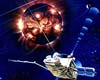 Paris, France (SPX) Jun 13, 2008
After over 17 years of operation, the joint ESA/NASA mission Ulysses will officially conclude on 1 July this year. The spacecraft, which studied the Sun and its effect on the surrounding space for almost four times its expected lifespan, will cease to function because of the decline in power produced by its on-board generators. |
|
|

| The content herein, unless otherwise known to be public domain, are Copyright 1995-2007 - SpaceDaily.AFP and UPI Wire Stories are copyright Agence France-Presse and United Press International. ESA Portal Reports are copyright European Space Agency. All NASA sourced material is public domain. Additional copyrights may apply in whole or part to other bona fide parties. Advertising does not imply endorsement,agreement or approval of any opinions, statements or information provided by SpaceDaily on any Web page published or hosted by SpaceDaily. Privacy Statement |
 del.icio.us
 Digg
Digg Reddit
 YahooMyWeb
 Google
 Facebook