|
 |
 |
 |
 |
 |
 |
 |
 |

 |
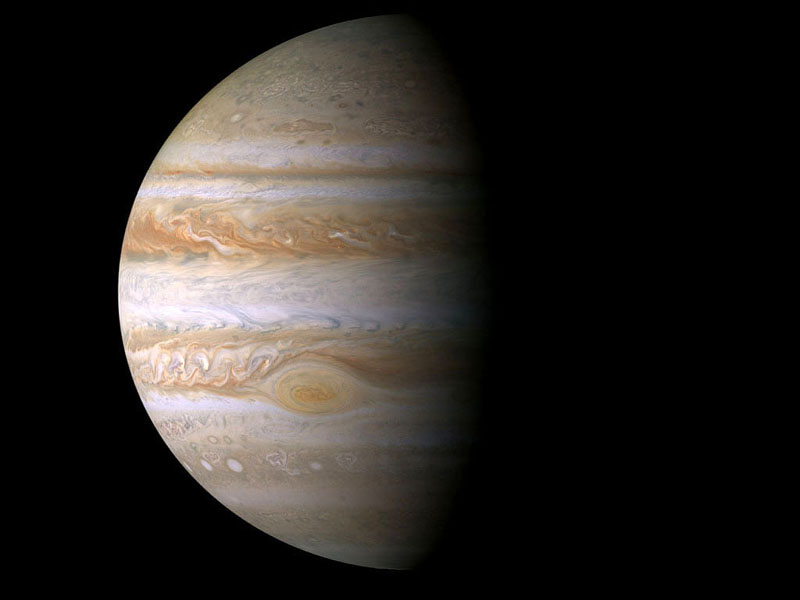
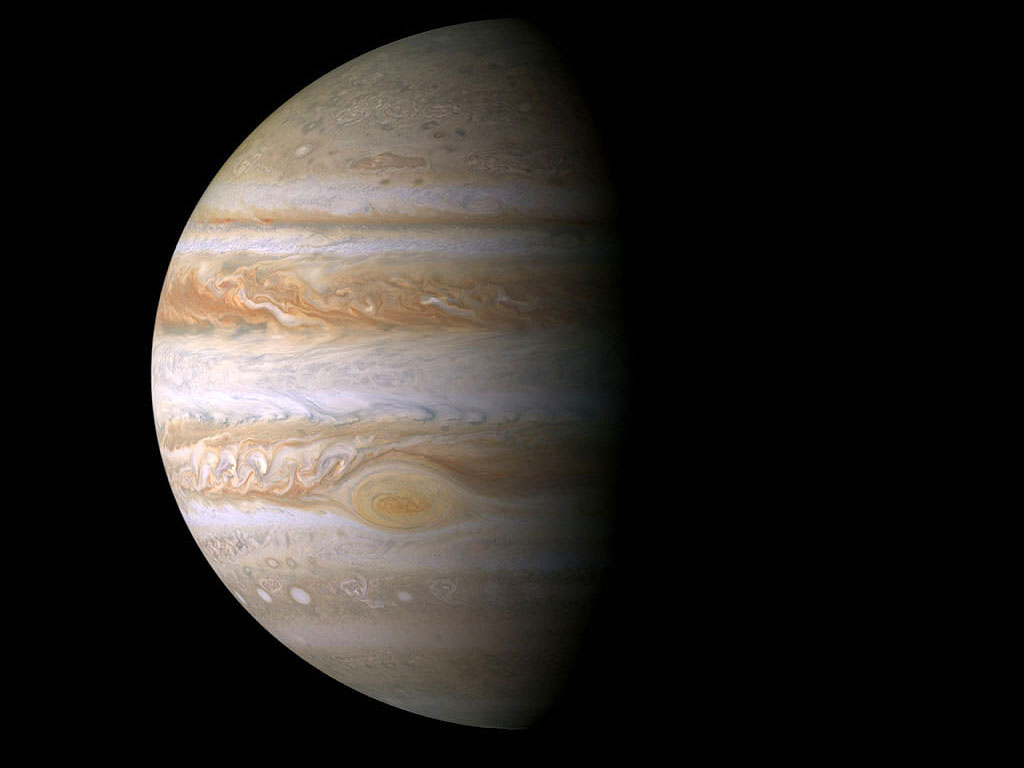
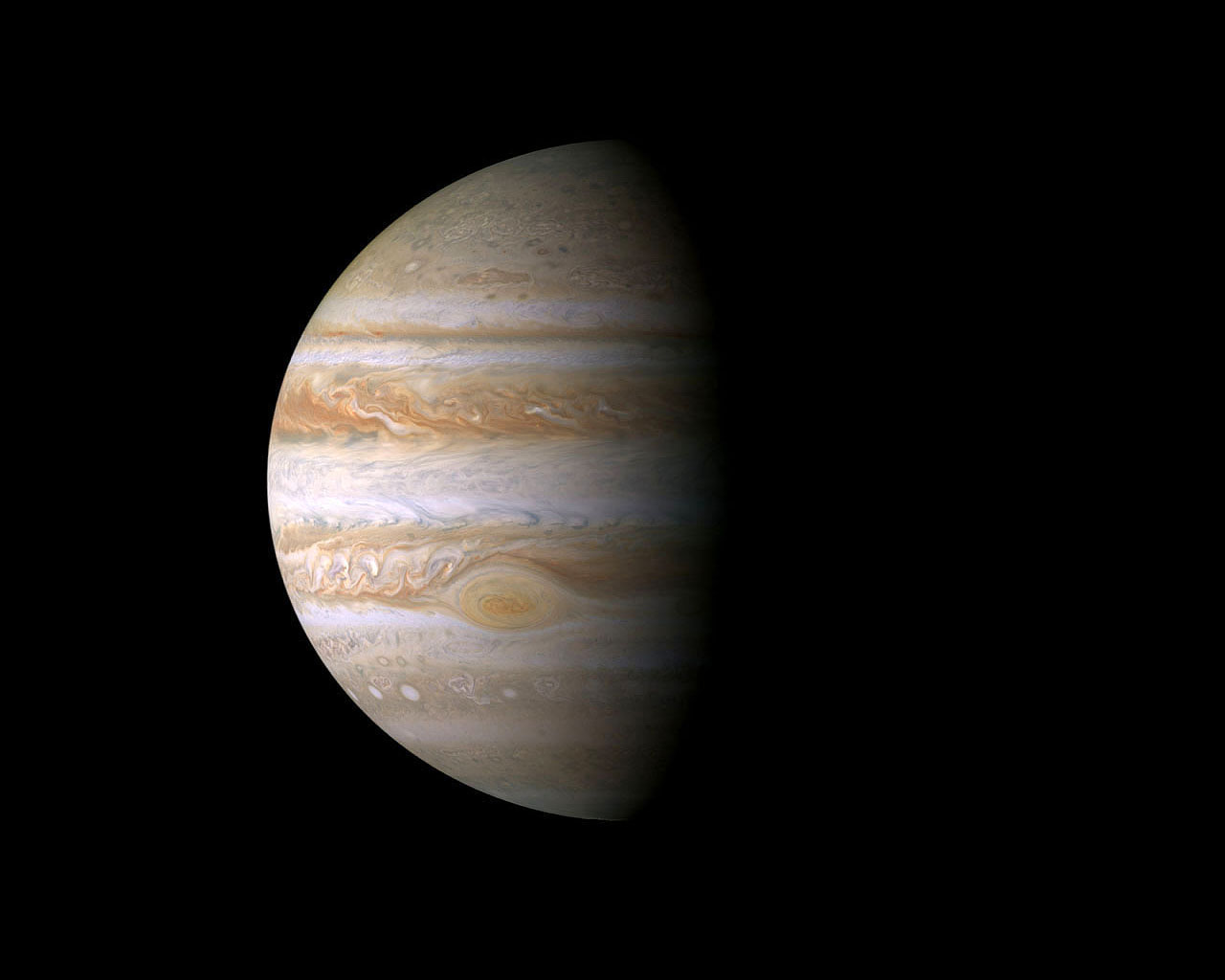
Cassini Captures Jupiter In Close-Up Portrait
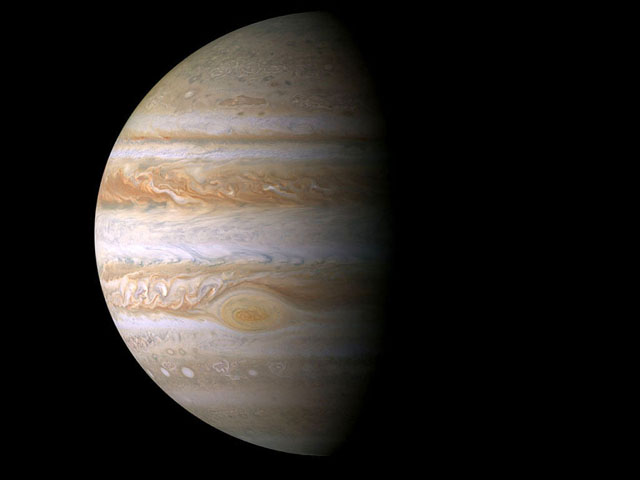
Boulder - Nov 17, 2003 Jupiter, our solar system's most massive planet, has been captured in the most detailed global color view ever seen, courtesy of NASA's Cassini spacecraft. Cassini acquired the view during its closet approach to the gas giant while en route to its final destination, Saturn. The Jupiter portrait is available at the JPL photojournal at and at the Cassini Imaging Central Laboratory. On December 29, 2000, a little more than a day before the spacecraft's closest approach to Jupiter, Cassini's narrow angle camera took a series of high resolution images at a distance of approximately 10 million kilometers (6.2 million miles), completely covering the planet. This allowed the Cassini imaging team to produce this new global view. "The imaging team wanted very much to take the ultimate picture of Jupiter," said Dr. Carolyn Porco, Cassini imaging team leader at the Space Science Institute in Boulder, Colorado. "The one that would show Jupiter in all its intricate and glorious complexity, the one that would knock your socks off. We managed to wedge this series of images in among all the pressing scientific observations going on near Cassini's closest approach to Jupiter, and we're very glad now that we did." The mosaic is constructed from 27 images. Nine image locations were required to cover the entire planet, and each of those locations was imaged in red, green and blue to provide true color. Although Cassini's camera can see more colors than humans can, Jupiter's colors in this new view look very close to the way the human eye would see them. Clever image processing techniques were used to assemble the images, taken over the course of an hour's worth of rotation on Jupiter, into a seamless mosaic. Each image was first digitally re-positioned and then re-illuminated to show the planet as it would have appeared at the time of the first image but under different lighting conditions. The final product was given a small boost in contrast to enhance visibility of the planet's atmospheric features. "Jupiter really is a planet of clouds," said Dr. Ashwin Vasavada, a Cassini imaging team associate and planetary scientist at the University of California, Los Angeles, who composited the mosaic. "You can stare for hours at the different forms, patterns and colors on this image. Bright, white thunderstorms punctuate several of Jupiter's bands, while the Great Red Spot, a vortex big enough to swallow Earth, leaves a large, turbulent wake behind it. Jupiter shows us what an atmosphere is capable of on the grandest scale." "These images were taken at a little over 10 million kilometers (6. 2 million miles) from Jupiter, but once we get into orbit at Saturn, the spacecraft is closer to Saturn, so our images taken in the Saturnian system should be absolutely spectacular," said Robert Mitchell, Cassini project manager at NASA's Jet Propulsion Laboratory in Pasadena, Calif. Cassini will reach Saturn's orbit on July 1, 2004, and release its piggybacked Huygens probe about six months later for descent through the thick atmosphere of the moon Titan. The probe could impact in what may be a liquid methane ocean. Community Email This Article Comment On This Article Related Links Cassini Imaging Central Laboratory for Operations Cassini at JPL SpaceDaily Search SpaceDaily Subscribe To SpaceDaily Express Space Tourism, Space Transport and Space Exploration News
 NASA Refines Design For Crew Exploration Vehicle
 Washington DC (SPX) Jan 12, 2006
NASA's Constellation Program is making progress toward selecting a prime contractor to design, develop and build the Crew Exploration Vehicle (CEV), America's first new human spacecraft in 30 years. |
|
|

| The content herein, unless otherwise known to be public domain, are Copyright 1995-2006 - SpaceDaily.AFP and UPI Wire Stories are copyright Agence France-Presse and United Press International. ESA PortalReports are copyright European Space Agency. All NASA sourced material is public domain. Additionalcopyrights may apply in whole or part to other bona fide parties. Advertising does not imply endorsement,agreement or approval of any opinions, statements or information provided by SpaceDaily on any Web page published or hosted by SpaceDaily. Privacy Statement |