|
 |
 |
 |
 |
 |
 |
 |
 |

 |
Carbon Dioxide Did Not End The Last Ice Age
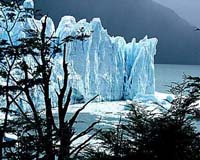
San Diego CA (SPX) Oct 04, 2007 Carbon dioxide did not cause the end of the last ice age, a new study in Science suggests, contrary to past inferences from ice core records. "There has been this continual reference to the correspondence between CO2 and climate change as reflected in ice core records as justification for the role of CO2 in climate change," said USC geologist Lowell Stott, lead author of the study, slated for advance online publication Sept. 27 in Science Express. "You can no longer argue that CO2 alone caused the end of the ice ages." Deep-sea temperatures warmed about 1,300 years before the tropical surface ocean and well before the rise in atmospheric CO2, the study found. The finding suggests the rise in greenhouse gas was likely a result of warming and may have accelerated the meltdown - but was not its main cause. The study does not question the fact that CO2 plays a key role in climate. "I don't want anyone to leave thinking that this is evidence that CO2 doesn't affect climate," Stott cautioned. "It does, but the important point is that CO2 is not the beginning and end of climate change." While an increase in atmospheric CO2 and the end of the ice ages occurred at roughly the same time, scientists have debated whether CO2 caused the warming or was released later by an already warming sea. The best estimate from other studies of when CO2 began to rise is no earlier than 18,000 years ago. Yet this study shows that the deep sea, which reflects oceanic temperature trends, started warming about 19,000 years ago. "What this means is that a lot of energy went into the ocean long before the rise in atmospheric CO2," Stott said. But where did this energy come from" Evidence pointed southward. Water's salinity and temperature are properties that can be used to trace its origin - and the warming deep water appeared to come from the Antarctic Ocean, the scientists wrote. This water then was transported northward over 1,000 years via well-known deep-sea currents, a conclusion supported by carbon-dating evidence. In addition, the researchers noted that deep-sea temperature increases coincided with the retreat of Antarctic sea ice, both occurring 19,000 years ago, before the northern hemisphere's ice retreat began. Finally, Stott and colleagues found a correlation between melting Antarctic sea ice and increased springtime solar radiation over Antarctica, suggesting this might be the energy source. As the sun pumped in heat, the warming accelerated because of sea-ice albedo feedbacks, in which retreating ice exposes ocean water that reflects less light and absorbs more heat, much like a dark T-shirt on a hot day. In addition, the authors' model showed how changed ocean conditions may have been responsible for the release of CO2 from the ocean into the atmosphere, also accelerating the warming. The link between the sun and ice age cycles is not new. The theory of Milankovitch cycles states that periodic changes in Earth's orbit cause increased summertime sun radiation in the northern hemisphere, which controls ice size. However, this study suggests that the pace-keeper of ice sheet growth and retreat lies in the southern hemisphere's spring rather than the northern hemisphere's summer. The conclusions also underscore the importance of regional climate dynamics, Stott said. "Here is an example of how a regional climate response translated into a global climate change," he explained. Stott and colleagues arrived at their results by studying a unique sediment core from the western Pacific composed of fossilized surface-dwelling (planktonic) and bottom-dwelling (benthic) organisms. These organisms - foraminifera - incorporate different isotopes of oxygen from ocean water into their calcite shells, depending on the temperature. By measuring the change in these isotopes in shells of different ages, it is possible to reconstruct how the deep and surface ocean temperatures changed through time. If CO2 caused the warming, one would expect surface temperatures to increase before deep-sea temperatures, since the heat slowly would spread from top to bottom. Instead, carbon-dating showed that the water used by the bottom-dwelling organisms began warming about 1,300 years before the water used by surface-dwelling ones, suggesting that the warming spread bottom-up instead. "The climate dynamic is much more complex than simply saying that CO2 rises and the temperature warms," Stott said. The complexities "have to be understood in order to appreciate how the climate system has changed in the past and how it will change in the future." Community Email This Article Comment On This Article Related Links University of Southern California Beyond the Ice Age
 Arctic Sea Ice Shatters Record Low: Diminished Ice Leads To Northwest Passage Opening
 Boulder CO (SPX) Oct 04, 2007
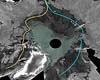
Arctic sea ice during the 2007 melt season plummeted to the lowest levels since satellite measurements began in 1979, according to researchers at the University of Colorado at Boulder's National Snow and Ice Data Center. The average sea ice extent for the month of September was 1.65 million square miles (4.28 million square kilometers), the lowest September on record, shattering the previous record for the month by 23 percent, which was set in 2005. At the end of the melt season, September 2007 sea ice was 39 percent below the long-term average from 1979 to 2000. |
|
|

| The content herein, unless otherwise known to be public domain, are Copyright 1995-2007 - SpaceDaily.AFP and UPI Wire Stories are copyright Agence France-Presse and United Press International. ESA Portal Reports are copyright European Space Agency. All NASA sourced material is public domain. Additional copyrights may apply in whole or part to other bona fide parties. Advertising does not imply endorsement,agreement or approval of any opinions, statements or information provided by SpaceDaily on any Web page published or hosted by SpaceDaily. Privacy Statement |