
 |
 |
 |
 |
 |
 |
 |
 |
 |

 |
Canadian Space Vision System
St Hubert - December 14, 1998 - Mac Evans, President of the Canadian Space Agency, Dr. Arthur J. Carty, President of NRC, and Paul J. Nephin, President of Neptec Design Group Ltd., went out of their way today to stress their enormous satisfaction at the successful role played by the Canadian Space Vision System in NASA's STS-88 space mission. This Canadian component was crucial to connecting the first two elements of the International Space Station, Zarya and Unity. "With the Canadian Space Vision System being used to assemble the International Space Station, Canada has shown itself to be a key player in this partnership project. Connecting the two elements would have been impossible without the Space Vision System," said Mac Evans. Begun on December 4, Mission STS-88 consisted of launching Unity, the second component of the International Space Station, into space. The Shuttle Endeavour caught up with the first component, Zarya, launched from Kazakhstan on November 20. The astronauts' mission was to connect Unity with the orbiting Zarya. To do this, the Orbiter Space Vision System was essential. This Canadian technology is an offshoot of the Canadian Space Vision System and was specially adapted for this mission. It will also be us ed, in the future, by operators on board the International Space Station. The system, conceived and initially developed by the National Research Council of Canada, was built and made available to NASA by Neptec Design Group from Kanata near Ottawa, Ontario. "Our team is extremely proud of successfully meeting the challenge of satisfying NASA requirements. Canada supplied two major components for this first stage of the assembly sequence. Spar Aerospace Ltd. developed the Canadarm and Neptec created the eyes to go along with the arm," said Paul J. Nephin. This technology provides the astronauts with a detection device that is appropriate for use in space. Effective assembly is achieved by using television monitors and the Orbitor Space Vision System. This optical aid will help the crew carry out precise manoeuvres when their vision is obscured. "The Canadian Space Vision System is an excellent example of how leading-edge Canadian science and technology is contributing directly to the success of the international space program and to Canada's pre-eminent position in this field," said NRC Presiden t, Dr. Arthur J. Carty.
ISS Reports At SpaceDaily
Email This Article Comment On This Article Related Links Space
 Satellite Launch To Boost DTH In India
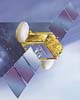 Calcutta, India (SPX) Dec 28, 2005
The successful launch Thursday of India's heaviest satellite from spaceport of Kourou in French Guyana may have boosted the country's space research efforts to yet another level, but it has also lifted the spirits of at least three Direct-To-Home televisions broadcasters, one of which has been waiting for years to launch its services in India. |
|
|

|
|
|
|
|
|
|
|
|
|
|
|
| The content herein, unless otherwise known to be public domain, are Copyright 1995-2006 - SpaceDaily.AFP and UPI Wire Stories are copyright Agence France-Presse and United Press International. ESA PortalReports are copyright European Space Agency. All NASA sourced material is public domain. Additionalcopyrights may apply in whole or part to other bona fide parties. Advertising does not imply endorsement,agreement or approval of any opinions, statements or information provided by SpaceDaily on any Web page published or hosted by SpaceDaily. Privacy Statement |

