|
 |
 |
 |
 |
 |
 |
 |
 |

 |
Canadian SCISAT Satellite Explains 2006 Ozone-Layer Depletion
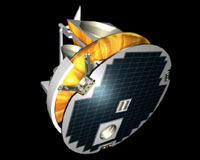
Longueuil QC (SPX) Oct 09, 2006 A surprising new study finds that high-speed winds above the northern hemisphere have a much greater impact on ozone levels than was previously thought. Scientists used data collected in 2006 by Canada's SCISAT. This satellite was launched in 2003 by the Canadian Space Agency to observe chemical processes in the ozone layer, 8 km to 50 km above the Earth's surface. The study showed that record amounts of ozone-destroying nitrogen oxide gases descended some 30 miles to the top of Earth's stratosphere because of strong atmospheric winds. It's a process that contributed to the depletion of the ozone layer. In February 2006, winds in the polar vortex-the massive, low-pressure winter system that confines air over the Arctic region-sped up significantly. They rivalled the strongest such winds on record and brought increased levels of nitrogen oxide to the upper stratosphere over the Arctic and the northern areas of North America and Europe. The only time more nitrogen oxide has been observed in the upper stratosphere was during winter 2003-2004, when huge solar storms bombarded the region with energy particles, and triggered a decrease of up to 60 percent in ozone molecules. "We had already seen that when strong winds combine with solar storms more nitrogen oxide entered the stratosphere," said Dr. Peter Bernath, principal investigator of SCISAT's Atmospheric Chemical Experiment. "But the sheer quantity of nitrogen oxide making its way from the upper stratosphere down to the ozone layer last February was remarkable, and there were no solar storms at the time." Researchers Peter Bernath and Chris Boone of the University of Waterloo, Ontario, Lynn Harvey and Cynthia Singleton of the University of Colorado at Boulder, and Janet Kozyra of the University of Michigan co-authored the paper. The article, "Enhanced Nox in 2006 linked to strong upper stratospheric Arctic vortex," was published in September in Geophysical Research Letters, a publication of the American Geophysical Union, Washington, D.C. Cora Randall of the Laboratory for Atmospheric and Space Physics at the University of Colorado led the study team. NASA and the Canadian Space Agency funded the research. Community Email This Article Comment On This Article Related Links CSA All about the Ozone Layer The Air We Breathe at TerraDaily.com All about the Ozone Layer
 Winds Trigger Increases In Ozone Destroying Gases In Upper Stratosphere
 Boulder CO (SPX) Oct 03, 2006
A surprising new University of Colorado at Boulder study indicates winds circling high above the far Northern Hemisphere have a much greater impact on upper stratospheric ozone levels than scientists had thought. |
|
|

| The content herein, unless otherwise known to be public domain, are Copyright 1995-2006 - SpaceDaily.AFP and UPI Wire Stories are copyright Agence France-Presse and United Press International. ESA PortalReports are copyright European Space Agency. All NASA sourced material is public domain. Additionalcopyrights may apply in whole or part to other bona fide parties. Advertising does not imply endorsement,agreement or approval of any opinions, statements or information provided by SpaceDaily on any Web page published or hosted by SpaceDaily. Privacy Statement |