|
 |
 |
 |
 |
 |
 |
 |
 |

 |
Canadian Researchers To Showcase CanX-2 Nanosat August 31
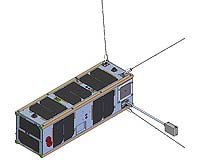
Toronto ON (SPX) Aug 30, 2005 University of Toronto researchers will demonstrate how a satellite the size of a milk carton that may revolutionize the space industry on Wednesday, Aug. 31, at 10 a.m. at University of Toronto Institute for Aerospace Studies (UTIAS) Lecture Hall, 4925 Dufferin Street. At only 3.5 kilograms, the Canadian Advanced Nanospace eXperiment 2 (CanX-2) will test small, low-power devices that could lay the groundwork for flying formations of small satellites that could eventually replace larger, more expensive satellites. At the demonstration, researchers will control the CanX-2 nanosatellite through a wireless radio link and download real-time images and telemetry from on-board equipment including a GPS-based positioning system, a miniature propulsion system and tiny devices used for sensing and controlling the satellite's orientation in space. "The point of this mission is two-fold," says Professor Robert Zee, managing director of the UTIAS Space Flight Laboratory (SFL). "The first is to provide complete development cycle training for students through a real space mission that has to be completed in two years. The second is to launch a tiny research platform into space to test innovative, revolutionary technologies in a rapid, risk-taking manner and also to perform important science missions that are now benefiting from the availability of smaller and smaller instrumentation." CanX-2 is the second nanosatellite mission at UTIAS/SFL. CanX-1, Canada's first nanosatellite and one of the smallest satellites ever built, was launched with the MOST microsatellite in 2003 by Eurockot Launch Services from Plesetsk, Russia. Community Email This Article Comment On This Article Related Links University of Toronto SpaceDaily Search SpaceDaily Subscribe To SpaceDaily Express Microsat News and Nanosat News at SpaceMart.com
 Small Satellite Solutions From Scotland
 Clyde, Scotland (SPX) Jan 12, 2006
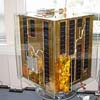
Clyde Space are offering the growing ranks of small satellite manufacturers power subsystem solutions for their missions. Based in purpose built facilities on West of Scotland Science Park in Glasgow, Clyde Space has a range of power subsystems for missions from as little as 1W up to in excess of 2.5kW. |
|
|

| The content herein, unless otherwise known to be public domain, are Copyright 1995-2006 - SpaceDaily.AFP and UPI Wire Stories are copyright Agence France-Presse and United Press International. ESA PortalReports are copyright European Space Agency. All NASA sourced material is public domain. Additionalcopyrights may apply in whole or part to other bona fide parties. Advertising does not imply endorsement,agreement or approval of any opinions, statements or information provided by SpaceDaily on any Web page published or hosted by SpaceDaily. Privacy Statement |