|
 |
 |
 |
 |
 |
 |
 |
 |

 |
Canada Buys Ikonos Imagery for Homeland Security Needs
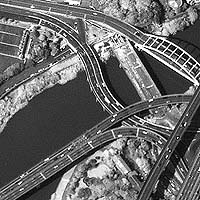
Denver - Jun 22, 2003 Canada's Office of Critical Infrastructure Protection and Emergency Preparedness (OCIPEP) has purchased 8,800 square kilometers of one-meter Ikonos satellite imagery to be used for routine disaster risk assessment and emergency preparedness along the Canada-United States border. The contract, which was negotiated by Space Imaging reseller PhotoSat Information Ltd., (Vancouver, B.C.) will provide imagery and data for eight border areas and towns including the Yukon-Alaska border, the Quebec-Vermont border, Sault Ste. Marie, Sarnia, Windsor and Niagara Falls. The mapping initiative is part of an overall border security effort spearheaded by the Canada/United States Critical Infrastructure Protection Steering Committee, formed after the signing of the 2001 Smart Border Agreement by Canada and the United States. OCIPEP is a member of the committee's mapping subgroup. The value of the contract was not disclosed. Ian Becking, manager, Geomatics, OCIPEP, said that his office worked closely with PhotoSat to identify key border areas for study with one-meter imagery. "We focused on regions where we needed new data. The Ikonos imagery from Space Imaging will be used to update our existing imagery databases. We regularly collect satellite images and data to support predictive computer models that help us better anticipate and respond to events such as storms, flooding and other disasters that can impact infrastructure." "Because of its spatial resolution and accuracy, the Ikonos imagery purchased by OCIPEP provides essential data regarding geography, topography and critical infrastructure," said Gerry Mitchell, president of PhotoSat. "Using this information, OCIPEP can build predictive models to anticipate disasters, determine access routes for firefighters and police, and plan in advance evacuation routes, emergency shelters and medical supply distribution centers. In addition, the agency can respond more effectively with up-to-date satellite image maps for contingencies." Gene Colabatistto, president of solutions at Space Imaging, said satellite imagery is becoming more common in government planning efforts regarding homeland security. "In the United States for instance, commercial satellite imagery is ideally suited to monitor coasts and borders, nuclear facilities, railway lines and utilities; anywhere where a natural disaster or attack could occur. Commercial imagery married with GIS technologies can be the backbone of homeland security." About PhotoSat PhotoSat is a team of geophysicists and associated geoscientists specializing in the computer processing of satellite image data for the identification, evaluation, monitoring and regulation of natural resources and the mapping of related infrastructure. Their goal is to provide satellite imagery and derived information sets that enable decision makers in the resource industries to make better decisions in less time. Their principal clients are mining, oil and gas, forestry and environmental companies and government agencies. PhotoSat distributes Landsat 7 images and imagery products under sublicense from Natural Resources Canada, the Canada Centre for Remote Sensing (CCRS). Landsat 7 data acquired by CCRS covers all of Canada, Eastern Alaska and most of the continental U.S.A. PhotoSat recently changed its name from Resource GIS and Imaging to reflect the company's increased focus on providing satellite imagery and derived data products. PhotoSat was Space Imaging's largest-volume North American distributor in Q1 2003. Community Email This Article Comment On This Article Related Links Space Imaging SpaceDaily Search SpaceDaily Subscribe To SpaceDaily Express Military Space News at SpaceWar.com
 GD Completes First Conversion Of Subs For US Navy Transformational Program
 Bremerton WA (SPX) Jan 10, 2006
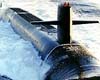
General Dynamics Electric Boat has completed its conversion of USS Ohio (SSGN-726), the first of four Trident submarines to be reconfigured as multimission vessels optimized for covert tactical strike and special operations support. Electric Boat is a wholly owned subsidiary of General Dynamics. |
|
|

| The content herein, unless otherwise known to be public domain, are Copyright 1995-2006 - SpaceDaily.AFP and UPI Wire Stories are copyright Agence France-Presse and United Press International. ESA PortalReports are copyright European Space Agency. All NASA sourced material is public domain. Additionalcopyrights may apply in whole or part to other bona fide parties. Advertising does not imply endorsement,agreement or approval of any opinions, statements or information provided by SpaceDaily on any Web page published or hosted by SpaceDaily. Privacy Statement |