
 |
 |
 |
 |
 |
 |
 |
 |
 |

 |
Canada Announces Micro Satellite Telescope
Saint-Hubert, - August 7, 1998 - The Canadian Space Agency has selected Dynacon Enterprises of Toronto as the lead contractor to develop and build the world's smallest astronomical space telescope that will be used to measure the ages of stars. Other key partners include the University of British Columbia (UBC) and the University of Toronto Institute for Aerospace Studies (UTIAS). The $4-million contract is subject to the successful completion of federal contract procedures and negotiations. The project -- called the Microvariability and Oscillations of Stars project, or MOST -- will bring together teams from Canada and the United States to design a low-cost, 50-kilogram satellite. The satellite's telescope, no bigger than a pie plate in diameter, will be secured to a suitcase-sized platform. The ability to use such a small satellite for a space telescope is made possible by Dynacon's new, lightweight gyroscope technology that corrects the wobbling motion of the satellite, and controls accurately where the satellite is pointing. Although relatively tiny in size, the satellite and its telescope will be a powerful tool to help astronomers probe the internal structures of stars to determine their ages. The MOST telescope will be able to detect and characterize the rapid oscillations in light intensity of stars -- a scientific feat not currently possible with any other telescope on earth or in space, including the Hubble Space Telescope. As part of the MOST team, the University of British Columbia will design and build a telescope of unprecedented photometric capabilities. Dynacon Enterprises, together with UTIAS, will design the microsatellite bus that will provide the high-precision pointing capability needed for both this and future CSA space science missions. Other MOST partners include: the Centre for Research in Earth and Space Technology (CRESTech) of Toronto; the Radio Amateur Satellite Corporation (AMSAT), which includes both Canadian and US Chapters; AeroAstro Corporation of Herndon, Virginia; the Royal Astronomical Society of Canada (RASC); and a team of consulting scientists from across Canada and the United States, led by the Principal Investigator, Prof. Jaymie Matthews of the Department of Physics and Astronomy of the University of British Columbia. The MOST project falls under the Small Payloads Program, sponsored by the CSA's Space Science Branch. The CSA is providing $4 million of the total cost. An additional $1.2 million is being provided from the Ontario Government Challenge Fund, while the balance is being financed by the University of British Columbia and the University of Toronto. Traditionally, the development and implementation of satellite technology and programs have been lengthy and expensive. With the Canada-led microsatellite project, the cost of having a satellite in orbit would be dramatically reduced. "The goal of the CSA's Small Payloads Program is to provide low-cost, frequent access to space for Canadian scientists, said Glen Campbell, the CSA's Project Manager for MOST. Lower cost means we can fly more experiments, keeping Canada at the forefront of innovative technologies that push the frontier of space research".
MicroSatellite Links
MOST Fact Sheet The Canadian Space Agency's MOST project is a co-operative scientific partnership to create the world's smallest astronomical space telescope, capable of measuring the ages of stars in our galaxy and perhaps even unlocking mysteries of the universe itself. Sponsored by the CSA's Space Science Branch, the various MOST project teams will design, build and monitor the microsatellite that will orbit 800 kilometres above the earth, allowing scientists to collect stellar data 24 hours a day. The tiny satellite, weighing only 50 kilograms, will carry a high precision telescope no bigger in diameter than a pie plate. The device will measure the oscillation in light intensity of stars in order to determine their composition as well as age. Younger stars are comprised of more hydrogen than helium. Because hydrogen is lighter than helium, sound waves pass through it more quickly. These sound waves set up pulsations in the star's surface, producing changes in the light intensity of the star. The satellite's telescope can measure the oscillations in intensity of the star, thus estimating its age. The MOST satellite is unique not only because of its small size, but because it will conduct stellar measurements from space. Traditionally, scientists have relied upon expensive, earth-based telescopes to provide research data. These instruments have been hampered by both the Earth's distorting atmosphere and its rotation -- allowing for only a partial viewing of a star due to the day-night cycle. In space, the MOST telescope will have an unblocked, constant view of a star for up to seven weeks at a time and will downlink data to ground stations at the University of British Columbia and the University of Toronto. The telescope will be mounted on a platform about the size of a suitcase. The ability to use such a small satellite for a space telescope is made possible by Dynacon's new, lightweight gyroscope technology that corrects the wobbling motion of the satellite, and controls accurately where the satellite is pointing. Toronto-based Dynacon Enterprises Limited has been selected as the lead contractor in the MOST project. Other key partners include: the University of British Columbia, the University of Toronto Institute for Aerospace Studies (UTIAS), as well as the Centre for Research in Earth and Space Technology (CRESTech) of Toronto, the Radio Amateur Satellite Corporation (AMSAT), which includes both Canadian and US chapters, AeroAstro Corporation of Herndon, Virginia, the Royal Astronomical Society of Canada (RASC), and a team of consulting scientists from across Canada and the United States led by the Principal Investigator, Prof. Jaymie Matthews, of the Department of Physics and astronomy of the University of British Columbia. Canada is already a noted leader in the study of stellar pulsation and rapid variability. The MOST project will build on this expertise, helping to expand upon and answer fundamental questions about the nature of the universe that have intrigued scientists and non-scientists alike since the beginning of time.
Email This Article Comment On This Article Related Links Space
 Satellite Launch To Boost DTH In India
 Calcutta, India (SPX) Dec 28, 2005
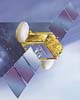
The successful launch Thursday of India's heaviest satellite from spaceport of Kourou in French Guyana may have boosted the country's space research efforts to yet another level, but it has also lifted the spirits of at least three Direct-To-Home televisions broadcasters, one of which has been waiting for years to launch its services in India.
--------------------------------------------------------- It's new. And it's downright terrific! Celestron's CPC Schmidt-Cassegrain telescope is the scope you've been waiting for! It offers new alignment technology, advanced engineering, and bold new design at a new, low price! In fact, Celestron's Professional Computerized (CPC) scope with revolutionary SkyAlign Alignment Technology redefines everything that amateur astronomers are looking for. It offers quick and simple alignment, GPS technology, unsurpassed optical quality, ease of use, advanced ergonomics, enhanced computerization and, most important, affordability. Want to view M-31 tonight? One button takes you there!
Shop for telescopes online at Telescopes.com! today!
|
|
|

|
|
|
|
|
|
|
|
|
|
|
|
| The content herein, unless otherwise known to be public domain, are Copyright 1995-2006 - SpaceDaily.AFP and UPI Wire Stories are copyright Agence France-Presse and United Press International. ESA PortalReports are copyright European Space Agency. All NASA sourced material is public domain. Additionalcopyrights may apply in whole or part to other bona fide parties. Advertising does not imply endorsement,agreement or approval of any opinions, statements or information provided by SpaceDaily on any Web page published or hosted by SpaceDaily. Privacy Statement |

