|
 |
 |
 |
 |
 |
 |
 |
 |

 |
Building Blocks Of Life Formed On Mars
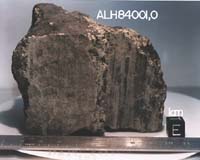
Washington DC (SPX) Dec 12, 2007 Organic compounds contain carbon and hydrogen and form the building blocks of all life on Earth. By analyzing organic material and minerals in the Martian meteorite Allan Hills 84001, scientists at the Carnegie Institution's Geophysical Laboratory have shown for the first time that building blocks of life formed on Mars early in its history. Previously, scientists have thought that organic material in ALH 84001 was brought to Mars by meteorite impacts or more speculatively originated from ancient Martian microbes. The Carnegie-led team made a comprehensive study of the ALH 84001 meteorite and compared the results with data from related rocks found on Svalbard, Norway. The Svalbard samples occur in volcanoes that erupted in a freezing Arctic climate about 1 million years ago-possibly mimicking conditions on early Mars. "Organic material occurs within tiny spheres of carbonate minerals in both the Martian and Earth rocks," explained Andrew Steele, lead author of the study. "We found that the organic material is closely associated with the iron oxide mineral magnetite, which is the key to understanding how these compounds formed." The organic material in the rocks from Svalbard formed when volcanoes erupted under freezing conditions. During cooling, magnetite acted as a catalyst to form organic compounds from fluids rich in carbon dioxide (CO2) and water (H2O). This event occurred under conditions where no forms of life are likely to exist. The similar association of carbonate, magnetite and organic material in the Martian meteorite ALH 84001 is very compelling and shows that the organic material did not originate from Martian life forms but formed directly from chemical reactions within the rock. This is the first study to show that Mars is capable of forming organic compounds at all. The organic material in the Allan Hills meteorite may have formed during two different events. The first, similar to the Svalbard samples, was during rapid cooling of fluids on Mars. A second event produced organic material from carbonate minerals during impact ejection of ALH 84001 from Mars. "The results of this study show that volcanic activity in a freezing climate can produce organic compounds," remarked co-author Hans E.F. Amundsen from Earth and Planetary Exploration Services. "This implies that building blocks of life can form on cold rocky planets throughout the Universe." "Our finding sets the stage for the Mars Science Laboratory (MSL) mission in 2009," remarked Steele, who is a member of the Sample Analysis on Mars (SAM) instrument team onboard MSL. "We now know that Mars can produce organic compounds. Part of the mission's goal is to identify organic compounds, their sources, and to detect molecules relevant to life. We know that they are there. We just have to find them." Community Email This Article Comment On This Article Related Links Meteoritics and Planetary Science Mars News and Information at MarsDaily.com Lunar Dreams and more
 Clues From Antarctica Help With Search For Water On Mars
 Columbus OH (SPX) Dec 11, 2007
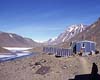
Scientists have gathered more evidence that suggests flowing water on Mars -- by comparing images of the red planet to an otherworldly landscape on Earth. In recent years, scientists have examined images of several sites on Mars where water appears to have flowed to the surface and left behind a trail of sediment. Those sites closely resemble places where water flows today in the McMurdo Dry Valleys in Antarctica, the new study has found. |
|
|

| The content herein, unless otherwise known to be public domain, are Copyright 1995-2007 - SpaceDaily.AFP and UPI Wire Stories are copyright Agence France-Presse and United Press International. ESA Portal Reports are copyright European Space Agency. All NASA sourced material is public domain. Additional copyrights may apply in whole or part to other bona fide parties. Advertising does not imply endorsement,agreement or approval of any opinions, statements or information provided by SpaceDaily on any Web page published or hosted by SpaceDaily. Privacy Statement |