|
 |
 |
 |
 |
 |
 |
 |
 |

 |
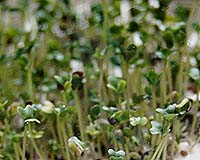
Broccoli Sprout-Derived Extract Protects Against Ultraviolet Radiation
Baltimore MD (SPX) Oct 23, 2007 A team of Johns Hopkins scientists reports in this week's issue of the Proceedings of the National Academy of Sciences that humans can be protected against the damaging effects of ultraviolet (UV) radiation - the most abundant cancer-causing agent in our environment - by topical application of an extract of broccoli sprouts. The results in human volunteers, backed by parallel evidence obtained in mice, show that the degree of skin redness (erythema) caused by UV rays, which is an accurate index of the inflammation and cell damage caused by UV radiation, is markedly reduced in extract-treated skin. Importantly, notes investigator Paul Talalay, M.D., professor of pharmacology, this chemical extract is not a sunscreen. Unlike sunscreens, it does not absorb UV light and prevent its entry into the skin. Rather, the extract works inside cells by boosting the production of a network of protective enzymes that defend cells against many aspects of UV damage. Consequently, the effects are long-lasting; the protection lasts for several days, even after the extract is no longer present on or in the skin. As skin cancer incidence is rising dramatically due to the escalating exposure of aging populations to the UV rays of the sun, Talalay says that "treatment with this broccoli sprout extract might be another protective measure that alleviates the skin damage caused by UV radiation and thereby decreases our long-term risk of developing cancer." The protective chemical agent in the broccoli sprout extracts is sulforaphane. It was first identified by Talalay and his colleagues more than 15 years ago and has been shown to prevent tumor development in a number of animals treated with cancer-causing chemicals. After first testing mouse models of skin cancer to confirm sulforaphane's protective effects, Talalay and his team tested six healthy volunteers. Each one was exposed to a pulse of UV radiation on small patches of their skin (less than 1 inch in diameter) that were either treated or untreated with different doses of broccoli extract. At the highest doses, UV-induced redness and inflammation were reduced by an average of 37 percent. The extracts were protective even when applied three days prior to UV exposure. The protection did vary considerably among the subjects, ranging from 8 percent to 78 percent, which Talalay notes may be due to genetic differences among individuals, local differences in the skin, or other factors such as dietary habits. He also points out that conventional sunscreens were essentially ineffective in these experiments. Community Email This Article Comment On This Article Related Links Johns Hopkins Medical Institutions Space Tourism, Space Transport and Space Exploration News
 Soyuz Returns Once Again
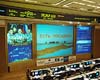 Korolev, Russia (SPX) Oct 23, 2007
The Descent Module (DM) of the Soyuz TMA-10 spacecraft has returned to Earth the commander and flight engineer of the 15th expedition of the International Space Station (ISS), as well as the space flight participant Malaysia's national Sheikh Muszaphar Shukor who in the period from October 12 to October 21 2007 worked under the 13th visiting expedition program (VE-13). |
|
|

| The content herein, unless otherwise known to be public domain, are Copyright 1995-2007 - SpaceDaily.AFP and UPI Wire Stories are copyright Agence France-Presse and United Press International. ESA Portal Reports are copyright European Space Agency. All NASA sourced material is public domain. Additional copyrights may apply in whole or part to other bona fide parties. Advertising does not imply endorsement,agreement or approval of any opinions, statements or information provided by SpaceDaily on any Web page published or hosted by SpaceDaily. Privacy Statement |