|
 |
 |
 |
 |
 |
 |
 |
 |

 |
Bringing The Coldness Of Space To The Sahara
Paris (ESA) Jan 20, 2003 Cooling is key in the Sahara Desert, especially when you're in the middle of it, trying to win a race. Cooling technology developed by ESA for space is helping one of the teams in this year's '2003 Dakar Rally', commonly known as the Paris-Dakar Rally. The 25th series of this famous rally started 1 January from Marseille, France, when 342 contestants gunned their engines and commenced 19 days of the gruelling endurance race through France and Spain before entering the Sahara and racing across North Africa. This year's route has been altered by an ugly geopolitical reality. Instead of finishing in Senegal's capital, Dakar, in West Africa, the cars, trucks and motorcycles will bypass the war-torn countries of Mali and Mauritania and travel east through Tunisia and Libya. They will cross the finish line on 19 January in Sharm El Sheikh in Egypt on the Red Sea coast after travelling 8,552 km. One of the teams in the race will be using ESA-developed space technologies to, literally, stay cool, in one of the hottest places on Earth where temperatures can reach as high as 58 degrees C. ESA is contributing several of its space cooling technologies to assist the Pescarola team, headed by racing veteran and four-time Le Mans champion Henri Pescarolo. Participating in his 14th Paris-Dakar rally, Pescarolo is driving a modified 255-HP, V6 Nissan Terrano bearing the ESA logo. He and his team will even eat like astronauts. "We have pulled together several technologies, which will help the Pescarolo team during the Paris-Dakar race this year," says Pierre Brisson, Head of ESA's Technology Transfer and Promotion Office. If all works as planned, the team will feel some of the coldness of space during their time in the desert.
Exhaust cooling from Ariane The thermal screen is fixed below the car around the exhaust manifold. It reduces the temperature of the exhaust pipe to 100 degrees C, which otherwise would reach 800 degrees C. Thanks to the thermal screen, the team enjoys a significant safety boost with the decreased risk of fire in case of oil or gasoline leaks. In addition, the temperature inside the car is decreased significantly, adding to the drivers' comfort and lessening their fatigue.
Drivers' helmets with innovative cooling system The cooling system uses solid-state Peltier elements to 'pump' the heat out from the inner side of the helmet and a circulating fluid system to transport the heat away to a special heat 'sink', where the heat is absorbed. The millimetre-thin, solid-state Peltier elements use electricity to produce the cooling effect without any moving parts. The system combines two space technologies already applied in non-space applications. The Spanish company NTE (Nuevas Tecnologias Espaciales) from Lli�� d'Amunt, near Barcelona, has adapted the Peltier elements in thermal-regulated clothing. A Canadian space firm, Med-Eng in Ottawa, has produced the cooling circuit for a special suit developed by Grado Zero Espace for the McLaren Formula 1 team.
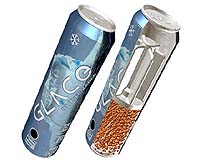
Mediaeval cooling boosted by space calculations Used for centuries, the principle of using evaporated water to cool the contents of terracotta jugs and goatskins, is being applied by a French company, ThermaGen, which has developed a self-cooling container that lowers any beverage by 15 degrees C within minutes. It works by evaporating one centilitre of water using the cooling properties of the terracotta clay. The performance has been boosted for this race to over 20 degrees C cooling to meet the extreme desert conditions. Where does space fit into this? The use of special advanced numerical simulation techniques developed for ESA for satellite mission calculations made it possible for ThermaGen to calculate precisely the behaviour of the complex physical phenomena that creates the cooling effect and to design the self-cooling container. The rally will be the first test in a series before this innovation is ready for general use by sportsmen and people travelling in hot and isolated areas.
'Space food' for the crew The 'space food' has to pass extremely severe qualifying tests to be authorised as astronauts' food, including bacteriological quality control and flight-certified packaging. Lyc�e H�telier de Souillac, a leading French culinary institute located outside Toulouse developed, in partnership with the French space agency (CNES), a special space menu that fulfils all the stringent requirements for space, yet maintains the famous French gourmet standard. This 'haute cuisine' is highly appreciated by space consumers, and greatly contributes to the morale and good mood on the International Space Station. Catering with these menus for the 2003 Dakar Rally proves that it is possible to enjoy good food even in the harshest of conditions.
Space technology improving daily life on Earth "Our programme validates the technology developed in the European space programmes. More than 150 ESA space technologies are today improving life on Earth. In addition the use of these space technologies in non-space areas opens new markets, increases the competitiveness of European business and is a new sources of income," emphasizes Brisson. There is work to be done before the advanced space technologies find their way to non-space systems on Earth. They must be evaluated, adapted for a specific use on Earth, and tested for duration and performance. Testing systems incorporating these new technologies in extreme races like Paris-Dakar and Le Mans has always been a good way to verify if a new system is valuable in everyday automobiles. "If a space technology proves its worth in these tough races, it has a future in everyone's car," Brisson added. Community Email This Article Comment On This Article Related Links 2003 Dakar Rally ESA Technology Transfer -- Cars and Trucks Pescarolo Sport Grado Zero Espace NTE Med-Eng ThermaGen Les gastronautes de MIR (French) SpaceDaily Search SpaceDaily Subscribe To SpaceDaily Express Space Technology News - Applications and Research
 Industry Team Achieve New Communications Technology With AESA Radars
 Baltimore MD (SPX) Jan 12, 2006
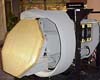
A team comprised of three leading US aerospace and defense contractors has demonstrated an innovative technological use of active electronically scanned array (AESA) radars for high-bandwidth communications. |
|
|

| The content herein, unless otherwise known to be public domain, are Copyright 1995-2006 - SpaceDaily.AFP and UPI Wire Stories are copyright Agence France-Presse and United Press International. ESA PortalReports are copyright European Space Agency. All NASA sourced material is public domain. Additionalcopyrights may apply in whole or part to other bona fide parties. Advertising does not imply endorsement,agreement or approval of any opinions, statements or information provided by SpaceDaily on any Web page published or hosted by SpaceDaily. Privacy Statement |