|
 |
 |
 |
 |
 |
 |
 |
 |

 |
Brazilian Leader To Sign Space Deals In First Russia Visit
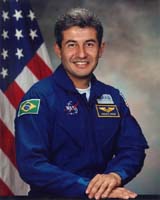
Moscow (AFP) Oct 17, 2005 Brazilian President Luiz Inacio Lula da Silva will sign agreements on space cooperation with Russia on Tuesday during his first visit to Moscow, the Brazilian embassy said. Russian President Vladimir Putin, who invited Lula during a visit to Brazil last November, is to host Lula at the Kremlin on Tuesday as part of the Brazilian leader's European tour. "Three space agreements will be signed," Alexander Sant'Ana, an embassy spokesman, said Monday. "The first agreement concerns a Brazilian astronaut, the second cooperation between the Brazilian and Russian space agencies and the third the creation of a committee on space cooperation." Marcos Pontes is set to become Brazil's first astronaut with a forthcoming flight to the International Space Station (ISS), for which he is being trained at Russia's Star City training centre, officials said. "The Brazilian astronaut is already in Star City and has started his training," said Sergei Tafrov, a senior official at Star City. The Brazilian space agency wants Pontes to blast off on a Soyuz rocket in April 2006 and has said it expects a firm date to be set by November 1. The agreements to be signed Tuesday will include Russian "space technology assistance" to Brazil, which is setting up a space base at Alcantara in the northeast of the country, Sant'Ana said, without elaborating. Lula was set to leave for Brazil later Tuesday. Community Email This Article Comment On This Article Related Links SpaceDaily Search SpaceDaily Subscribe To SpaceDaily Express Space Station News at Space-Travel.Com
 NASA Had No Choice But To Buy Soyuz Flights
 Washington DC (SPX) Jan 09, 2006
NASA's announcement last week that it will pay Roskosmos $43.6 million for a round-trip ride to the International Space Station this spring, and an equivalent figure for an as-yet-undetermined number of future flights to the station until 2012, represents the agency's acknowledgment that it had no alternative. |
|
|

| The content herein, unless otherwise known to be public domain, are Copyright 1995-2006 - SpaceDaily.AFP and UPI Wire Stories are copyright Agence France-Presse and United Press International. ESA PortalReports are copyright European Space Agency. All NASA sourced material is public domain. Additionalcopyrights may apply in whole or part to other bona fide parties. Advertising does not imply endorsement,agreement or approval of any opinions, statements or information provided by SpaceDaily on any Web page published or hosted by SpaceDaily. Privacy Statement |