|
 |
 |
 |
 |
 |
 |
 |
 |

 |
Borneo Mud Outflow Contains Toxic Chemicals
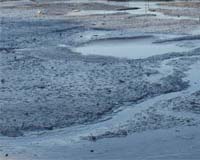
Jakarta (AFP) Nov 29, 2006 A mud spurt which began when villagers were drilling for water on the Indonesian part of Borneo contains toxic substances, but local officials are powerless until the central government intervenes, an official said Wednesday. Four men were drilling a well in Kolam Kanan village in South Kalimantan on November 22, when a stream of mud and water sprang up. Villagers have built a meter-high (three-foot) wall of sand bags over an area of some 40 metres by 30 metres in an attempt to contain the flow. It was the second mud flow since a gas drilling operation in Sidoarjo, East Java, led to a fountain of hot mud in August that has since submerged hundreds of hectares of land and villages and forced the evacuation of some 13,000 people. "The mud contains a high level of nitrogen oxide and the gas coming out of the source also contains a high level of CH4, that is a light, odorless and colorless gas that is highly inflammable," said Heryo Dharma, the deputy head of the province's mining office. He said the CH4, or methane gas, content was well above the safe level and that local authorities have banned any flame, including lit cigarettes, around the site. "Since there are toxic and dangerous substances in area, we the local government have no authority to do anything but to report to the central government," Dharma told AFP. He said he had been ordered to fly to Jakarta on Thursday to report to the energy and mineral resources ministry. The mud, which had initially spurted from a small drilling hole, was now coming out from an area more than five meters across, he said, and could spurt up to a height of two meters.
Source: Agence France-Presse Community Email This Article Comment On This Article Related Links Our Polluted World and Cleaning It Up Our Polluted World and Cleaning It Up
 UN Seeks Help To Clean Up Deadly Ivorian Toxic Waste Dumps
 Nairobi (AFP) Nov 23, 2006
The international community must help Ivory Coast clean up and rehabilitate sites contaminated this year by illegal toxic waste dumping that killed 10 people, the United Nations said Friday. Ahead of a global hazardous waste conference here next week, the UN Environment Programme (UNEP) said it was unfair for one of the world's most impoverished nations to pay the 30-million-dollar (20-million-euro) cost. |
|
|

| The content herein, unless otherwise known to be public domain, are Copyright 1995-2006 - SpaceDaily.AFP and UPI Wire Stories are copyright Agence France-Presse and United Press International. ESA PortalReports are copyright European Space Agency. All NASA sourced material is public domain. Additionalcopyrights may apply in whole or part to other bona fide parties. Advertising does not imply endorsement,agreement or approval of any opinions, statements or information provided by SpaceDaily on any Web page published or hosted by SpaceDaily. Privacy Statement |