|
 |
 |
 |
 |
 |
 |
 |
 |

 |
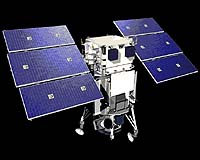
Boeing Launches WorldView-1 Earth-Imaging Satellite
St. Louis MO (SPX) Sep 18, 2007 Boeing, through its commercial launch business, successfully launched the WorldView-1 satellite for DigitalGlobe aboard a Delta II rocket. Lift-off occurred at 11:35 a.m. Pacific time from Pad SLC-2W at Vandenberg Air Force Base, Calif. The Delta II rocket deployed the spacecraft approximately 73 minutes after lift-off. The WorldView-1 satellite will provide commercial, high-resolution images of Earth, and is capable of collecting, storing and down-linking more frequently updated imagery than any other commercial imaging satellite in orbit. "Today's launch of WorldView-1 marks our second successful commercial launch for Boeing Launch Services in 2007 and puts us on track for a very successful year with two of our three scheduled launches completed," said Ken Heinly, vice president of Boeing Launch Services. The launch also marks the 75th consecutive successful launch of a Delta II rocket. Boeing designed the "workhorse" launch vehicle and operated it until Dec. 1, 2006, when the United Launch Alliance joint venture between Boeing and Lockheed Martin was formed to support the U.S. government. Boeing Launch Services purchased the launch vehicle and associated support services from United Launch Alliance. Community Email This Article Comment On This Article Related Links Earth Observation News - Suppiliers, Technology and Application
 New Faraway Sensors Warn Of Emerging Hurricane's Strength
 Pasadena CA (SPX) Sep 10, 2007
Days before a growing hurricane possibly batters a local coastline, meteorologists rush to predict just how strong its winds and rains may grow knowing that lives and an area's economy may depend on their results. A new study supported by NASA and the U.S. Office of Naval Research takes forecasters one step further to improving their ability to predict just how powerful an oncoming storm may become by using highly-sensitive sensors located thousands of miles from the storm to detect lightning outbreaks within a hurricane's most dangerous area. |
|
|

| The content herein, unless otherwise known to be public domain, are Copyright 1995-2007 - SpaceDaily.AFP and UPI Wire Stories are copyright Agence France-Presse and United Press International. ESA Portal Reports are copyright European Space Agency. All NASA sourced material is public domain. Additional copyrights may apply in whole or part to other bona fide parties. Advertising does not imply endorsement,agreement or approval of any opinions, statements or information provided by SpaceDaily on any Web page published or hosted by SpaceDaily. Privacy Statement |